19/10/2026 19:07
Which Demo Comes Next? A YouTube Playlist Workflow for Cambodian Irrigation Shops
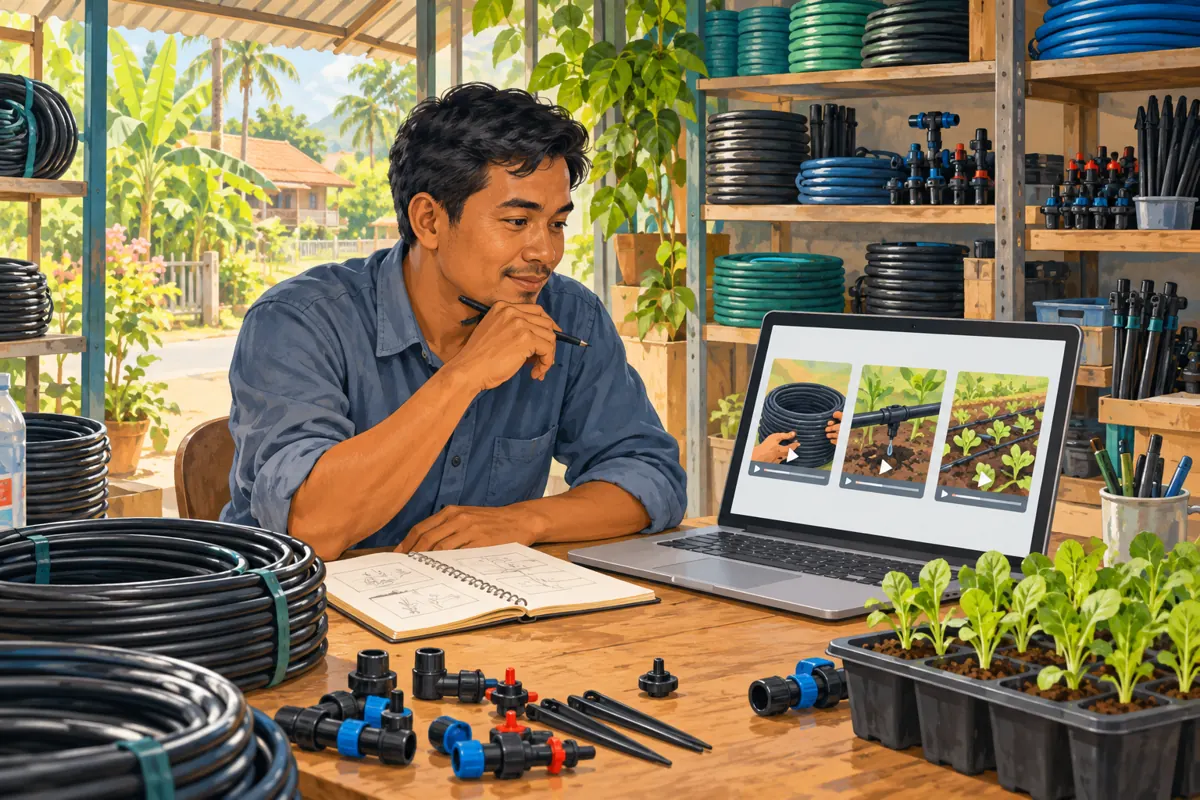
A customer who watches a hose demonstration may still need to identify a connector, explain their garden layout and ask about availability. If those answers sit in unrelated uploads, sharing the channel leaves the customer to assemble the guide. A carefully ordered YouTube playlist can make that journey easier. This article uses a hypothetical Cambodian irrigation shop to show how to build a practical buying guide from existing videos, test the sequence and promote it honestly. For businesses considering an SMM panel, the same exercise also clarifies what a service can actually address: a larger counter cannot repair a confusing learning path.
1. Define the decision the playlist should support
Start with one customer situation rather than the shop’s entire inventory. In this hypothetical example, a Battambang shop frequently receives questions from people choosing parts for a small vegetable garden. The playlist’s purpose is to help them prepare a useful enquiry about compatible components. It is not a complete irrigation design course, and watching it does not establish that a particular system will work on their property.
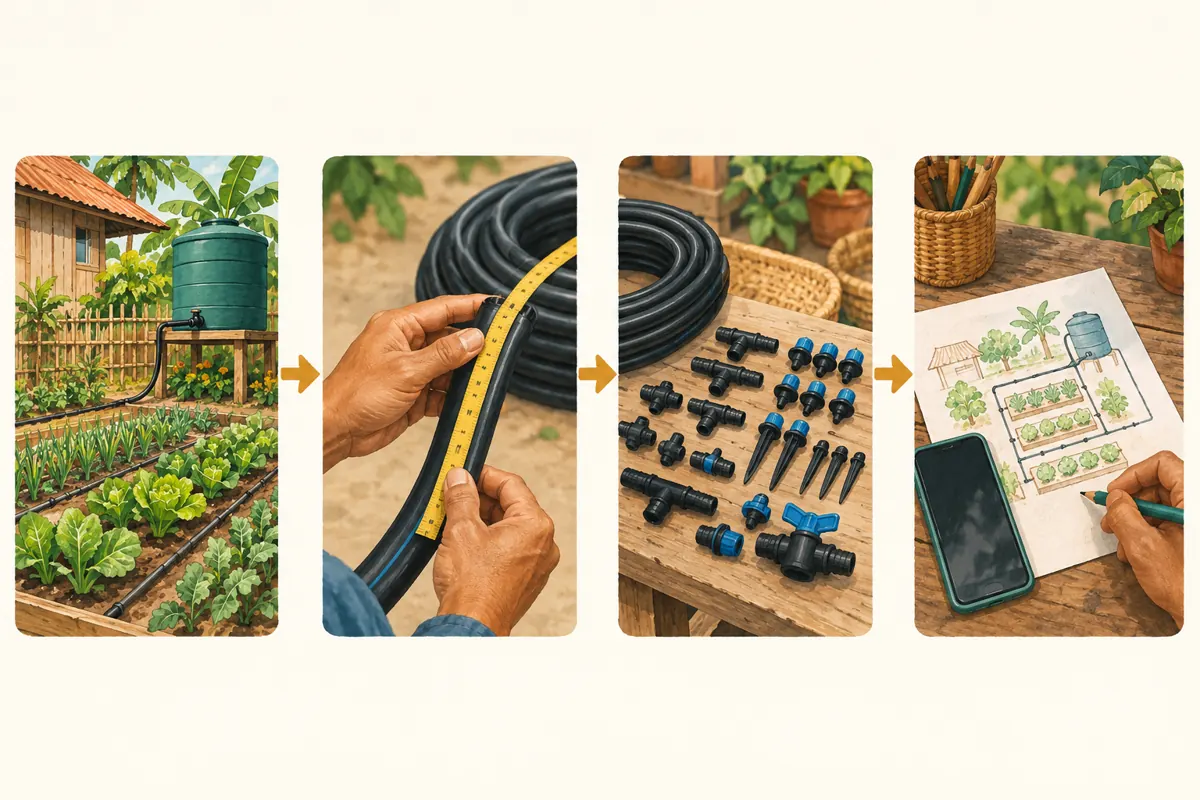
Write a working sentence: after watching, the customer should know which existing parts to photograph, which measurements to provide and what still requires the shop’s assessment. Use that sentence to accept or reject videos. A visually impressive pump demonstration may belong elsewhere if it does not help this decision. A quieter close-up showing how to identify a fitting may be essential. This approach gives the playlist a clear endpoint and prevents it from becoming another miscellaneous product catalogue.
2. Audit the existing demos before adding anything
Make a short inventory with each video’s title, link, main question, spoken language and unresolved limitation. Watch the actual footage rather than relying on its thumbnail. Check whether the presenter names the component accurately, shows the relevant detail clearly and distinguishes a demonstration from a promise about every installation. Record outdated stock statements or prices so they do not slip into a newly promoted guide.
Classify each candidate as ready, needs correction or outside scope. In the hypothetical shop, an older connector close-up might remain useful while an old bundle offer needs replacement. Do not include the bundle video simply because it already attracted attention. If a necessary explanation is missing, record the gap and film a focused answer. Avoid compensating with several loosely related clips that make customers hunt for the missing detail.
3. Arrange the videos around prerequisites
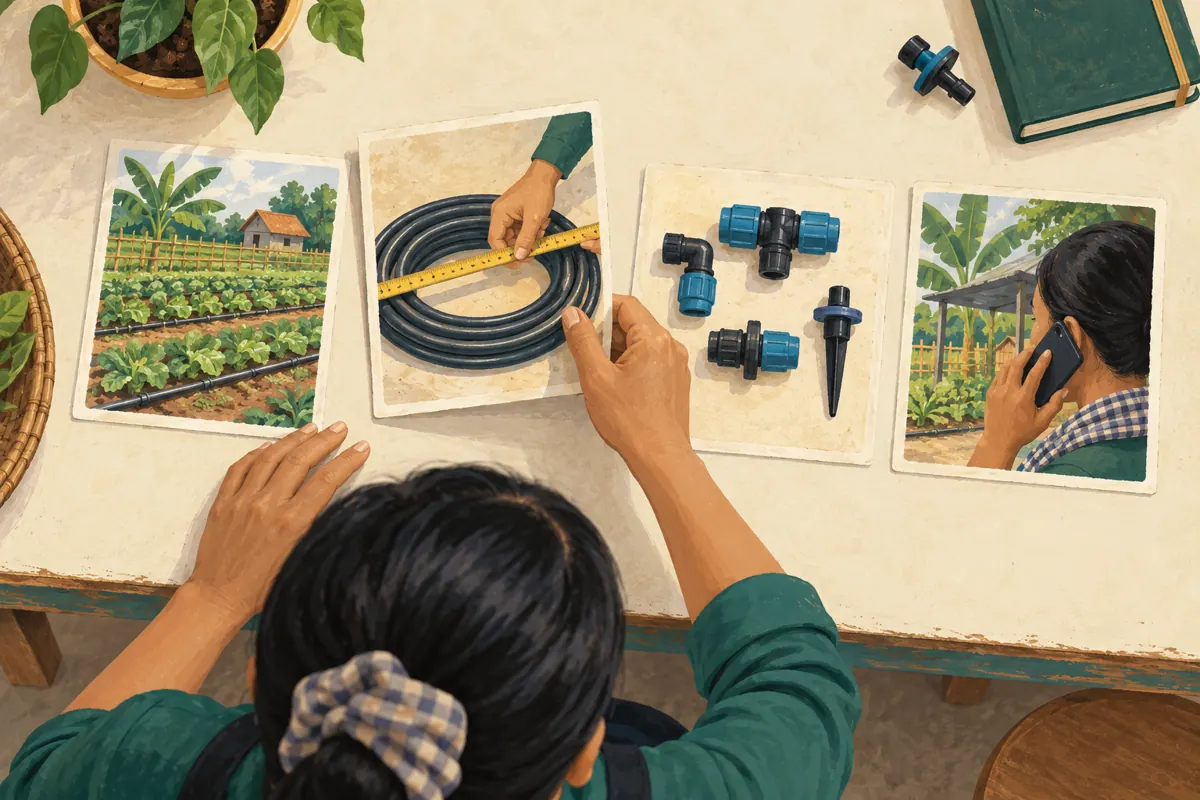
Sketch the sequence on paper before changing YouTube. For this hypothetical buying guide, a sensible progression is understanding the garden situation, identifying existing tubing, comparing relevant fittings and preparing an enquiry. Each stage should supply information needed by the next. The specific technical details must come from the shop’s verified product information; this sequence is an editorial framework, not an installation specification.
Ask what a newcomer must already understand when each video begins. If the connector comparison assumes that viewers know their tubing size, the identification explanation should come first. If two videos answer the same question, choose the clearer one instead of keeping both automatically. Include a brief recap within each demo so someone arriving directly can still follow it. Viewers may skip around, so useful ordering should support understanding without making every clip dependent on a compulsory viewing marathon.
4. Create the playlist and save the intended order
YouTube’s official desktop instructions describe creating a playlist from a video through More, Save and Create new playlist, then entering a name and choosing privacy. Add the selected demos to that collection. To arrange them, open the playlist itself and drag videos into position. YouTube distinguishes this from dragging within the watch-page playlist panel, which temporarily changes playback order. Its instructions also note that reordering is unavailable for playlists containing only Shorts.
After arranging the guide, close it and reopen it to check the result. Keep a simple editorial note listing the intended sequence so another staff member can verify it later. Do not assume that the order visible during one viewing session proves the shared guide is correct. If your source material consists entirely of Shorts, avoid promising this ordering workflow; consider whether a coherent longer demonstration would better serve the customer’s question.
5. Name the guide for the customer’s task
Use a title that explains what the collection helps someone do. An illustrative English working title is “Prepare Your Small-Garden Irrigation Enquiry.” A shop serving Khmer-speaking customers should write the actual customer-facing title and explanation in natural Khmer, preserving genuine product codes where necessary. Avoid a title that promises a complete solution if the videos only introduce component choices.
Draft a compact description stating the intended viewer, the recommended starting point and the information needed for the next conversation. Explain whether the shop needs a photo of an existing fitting, approximate layout dimensions or details about the water source. Do not request a public home address or unnecessary personal information. Separate general educational content from stock confirmation: the guide can remain useful even when a featured item needs an availability check. Have a colleague read the wording without watching the videos and describe what they expect to learn.
6. Choose visibility deliberately and test access
YouTube allows public, unlisted and private playlists. Its privacy guidance says public playlists can be watched and shared by anyone, while unlisted playlists can be watched and shared by anyone with the link. Unlisted therefore suits a link-based review, but it should not be treated as confidential storage. For a guide intended for general promotion, choose visibility that matches that purpose.
On desktop, YouTube documents the settings under Studio, Content, Playlists, Details and Visibility, followed by Save. Once configured, open the intended customer link in a signed-out browser and on a phone. Check every included video, not just the collection’s title. Record anything unavailable, confusing or inconsistent. A shop owner’s successful viewing session is insufficient evidence that a visitor can follow the same path. Keep customer records and private quotations out of the material regardless of the playlist setting.
7. Match the shared link to the customer’s question
Share the full guide when someone needs orientation. Share the specific relevant demo when the customer already understands the basics and asks about one component. In the hypothetical shop, a beginner planning a garden receives the playlist with a short explanation of where to start. Someone asking how to identify an existing connector receives the identification demo and a request for the appropriate photo.
Write a promotional message around the practical benefit: the guide explains what information to gather before asking about suitable parts. Avoid claiming that watching guarantees compatibility or a particular crop result. Before sharing widely, send the exact message and link to a colleague acting as a first-time visitor. Ask them to find the starting video and explain the next step. Treat hesitation as useful editing feedback. Do not coach them through the route while evaluating whether the route itself is clear.
8. Apply a policy and purpose check to SMM services
The supplied SabySMM catalogue includes “YouTube - Subscriber ~ Max 1M ~ 100-500/days ~ 0-12 hrs ~ 𝗥𝗘𝗙𝗜𝗟𝗟 30D”. Its title identifies a subscriber-oriented listing; the supplied description is empty. The title alone does not establish delivery methods, audience location, genuine interest or verified timing and refill terms. It also does not describe a service that chooses videos, improves explanations or tests a customer’s learning sequence.
YouTube’s fake engagement policy prohibits artificially increasing engagement metrics and warns that a hired promoter’s actions can affect the channel. Do not purchase artificial subscribers or views to make the guide appear trusted. Purchased engagement is not evidence of Cambodian users, qualified enquiries, sales or official ad delivery. For this workflow, prioritise the missing explanation, clearer filming or visitor testing. Any proposed promotion should have an understandable method that complies with platform rules; a catalogue label is not proof of compliance or official affiliation.
9. Review whether enquiries become easier to answer
Choose a practical review question before promotion: does the guide help customers provide the information needed for a useful response? Keep a small, privacy-conscious record of recurring missing details. Categories might include unclear component photos, missing dimensions or uncertainty about the next step. These observations help identify editorial gaps without pretending to prove that a playlist caused a sale.
In a hypothetical review, customers may provide clearer fitting photos but still omit their garden layout. That suggests improving the enquiry-preparation video or its explanation. It does not justify announcing a performance uplift without reliable evidence. Likewise, a rise in visible views cannot establish that people watched in order or understood the material. Use actual conversations and voluntary feedback to investigate confusion. If several customers ask the same question after receiving the guide, revisit the relevant explanation before adding more promotional activity.
10. Maintain the sequence when products change
Give one person responsibility for checking the guide when a featured component changes, an offer expires or a demonstration is replaced. Review the surrounding videos as well as the changed item. Removing an introductory explanation can leave a later comparison dependent on knowledge the playlist no longer provides. Adding the newest upload at the beginning can create the same problem.
Common mistakes include organising by upload date instead of learning need, placing a sales pitch before essential identification advice and confusing a temporary playback rearrangement with the saved sequence. Another is adding every new product clip simply because it concerns irrigation. Maintain the original decision boundary. Keep a brief change note stating what moved and why, then repeat the visitor test. The guide is ready to promote when its explanations, order and enquiry instructions agree with what the shop can currently offer.
Frequently asked questions
How many videos should the irrigation guide contain?
Use the fewest videos that answer the chosen question properly. There is no need to reach an arbitrary target. The hypothetical four-stage sequence in this article is a planning example, not a platform requirement. Combine repetitive explanations, but keep separate videos when customers genuinely need to revisit different tasks.
Should the most popular demonstration go first?
Only if it provides the best starting point. A popular advanced comparison may confuse beginners who have not identified their existing parts. Choose the opening video by its ability to establish context, and give customers with a specific question a direct route to the relevant demonstration.
Can we mix Khmer and English demonstrations?
You can plan a mixed-language collection, but assess whether the intended customer can follow every essential step. Label language differences clearly and provide an understandable equivalent where needed. If the guide repeatedly forces viewers into a language they cannot use, separate language-specific guides may be more practical.
Will a better playlist order guarantee more sales or higher rankings?
No. Ordering is an editorial decision that can make explanations easier to follow. Sales also depend on suitability, availability, price, service and the customer’s circumstances. Assess whether the guide resolves questions, and avoid presenting changes in counters as proof that the sequence caused a business result.
What should we do if we already paid for a subscriber service?
Keep the order record separate from your assessment of the guide. Review the actual service method against YouTube’s policy, and do not repeat activity that artificially inflates engagement. Ask the provider about available cancellation or support options without assuming either exists. Continue improving the content using genuine customer questions.
Explore the current service catalogue, create an account, or ask a specific question through support tickets.
- YouTube Help: Create & manage playlists
- YouTube Help: Change playlist privacy setting
- YouTube Help: Fake engagement policy
Prepared with AI assistance. Illustrations explain the workflow and do not represent customer results.