22/10/2026 13:17
Can Buyers Keep the Stitch Guide? TikTok Download Decisions for Cambodian Crochet Shops

A useful crochet demonstration may become part of a buyer’s working routine: watch the hook movement, pause, try the stitch, then replay. For a Cambodian crochet-supply shop, that makes the ability to keep a tutorial an editorial decision worth making before promotion. A copied lesson should explain the materials and technique without depending on a caption the viewer no longer sees. It should also avoid carrying yesterday’s stock promise into tomorrow’s enquiry. This guide explains how to decide whether downloads suit your content, prepare a lesson that travels clearly, test the viewer experience and evaluate related SMM-panel claims without confusing visible activity with buying interest.
1. Define the task the saved video should solve
Start with one practical question a buyer could answer while holding yarn and a hook. Suitable examples include finding the working loop, comparing two hook grips or seeing where the hook enters a practice swatch. A general shop tour has a different purpose. Write the intended task before filming, then remove scenes that do not help someone complete it. This gives the tutorial a reason to exist beyond attracting a quick view.
Consider a hypothetical crochet-supply shop in Phnom Penh whose customers ask how to begin a small practice square. The owner wants beginners to repeat the demonstration at home. A reusable lesson could help with that task, while a separate sales post explains which materials are currently available. This is an illustrative scenario, not a customer case study or a claim that downloadable lessons produce sales.
2. Understand what the download control changes
TikTok’s download guidance says enabling downloads lets people save content to their devices. Turning the setting off applies to existing and future posts, but previously downloaded copies remain on other people’s devices. Links can still be shared. Private accounts and accounts belonging to people under 16 cannot enable downloads. These are distribution controls; they do not make a public tutorial confidential.
Treat the setting as an account-level decision. Review the other material on the profile before changing it for one useful lesson. A shop mixing evergreen demonstrations with temporary offers should first identify which posts could become confusing when separated from their original context. Put that review in the content brief so the person handling promotion understands why the setting was chosen. Do not treat a download decision as an instruction to change unrelated privacy preferences.
3. Choose between a reusable lesson and a changing announcement
Use a simple decision process. First, ask whether the core instruction will remain useful after the current promotion ends. Second, ask whether viewers need surrounding discussion to interpret it correctly. Third, ask whether the shop is comfortable with the clip circulating outside the original post. A basic demonstration with clearly identified materials is a stronger candidate for offline use than a clip built around limited stock or an unresolved product question.
If the lesson depends on corrections, private customer details or a supplier’s unreleased design, prepare different public material before promoting it. Download settings cannot repair an unsuitable publishing decision. For a mixed account, the sensible choice may be to leave downloads disabled and provide a separately prepared, approved tutorial file through the shop’s established customer communication process. Choose according to the content’s purpose, rather than assuming every additional sharing option is automatically useful.
4. Put essential teaching context inside the lesson
A portable tutorial needs a clear beginning. Show the relevant hook, yarn and starting position before the movement begins. Identify the actual materials used; do not imply that every yarn or hook combination produces the same result. When demonstrating a stitch, hold the starting loop still long enough to locate it, perform the movement at a readable pace and show the resulting stitch from the same angle.
For Cambodian customers who prefer Khmer, use reviewed Khmer narration or concise Khmer labels in the actual tutorial. Keep genuine product codes unchanged where they help identify an item. Explain specialist terms instead of assuming buyers know English abbreviations. A shop serving several language groups can prepare separate language versions with matching demonstrations. Ask a reviewer to describe the action back to you; agreement with the script alone does not establish that the lesson is understandable.
5. Separate permanent instructions from temporary selling details
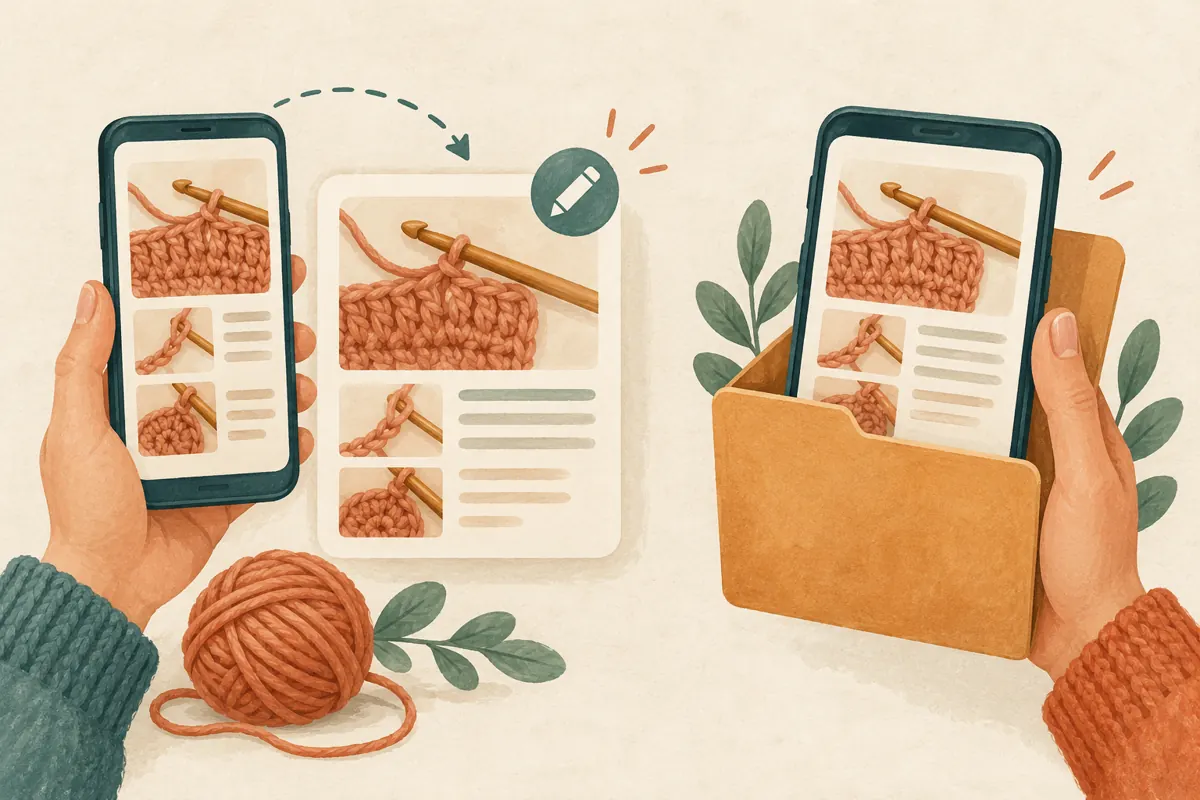
Keep changing prices, colour availability and collection arrangements out of the reusable teaching sequence where possible. The lesson can identify the demonstrated materials and tell viewers to confirm current availability with the shop. Put a temporary offer in a clearly dated announcement. This helps staff answer a future enquiry without appearing to withdraw a promise that was embedded in an old instructional clip.
In a hypothetical example, a Siem Reap supplier demonstrates a stitch using cream yarn, but that colour later sells out. The technique remains useful; the stock message does not. Staff can explain the available alternatives while asking whether the buyer wants the demonstrated yarn or simply a suitable practice material. Avoid casually substituting a different product without explaining the difference. The lesson should help buyers ask a more precise question, rather than silently turning one sample into a permanent catalogue.
6. Check the setting and test from a viewer’s position
TikTok documents this route: Profile, Menu, Settings and privacy, Privacy, Downloads, then Video downloads. Confirm that you are reviewing the intended shop profile. For a permitted download, TikTok’s viewer instructions use Share and Save video. Test with a colleague’s ordinary viewer account instead of relying only on what the owner sees.
Open the resulting file in the phone’s gallery and review it without referring back to the post. Can the colleague identify the materials, follow the hand movement and understand the next step? Listen at a normal volume and check whether small labels remain readable. Record specific failures such as a hidden hook tip or missing material identifier. If the expected option is unavailable, check the current in-app guidance and account conditions. Do not send customers to tools that bypass the creator’s controls.
7. Give the copied lesson a useful route back to the shop
The next step should match what the viewer has learned. After a practice-stitch lesson, invite a question about the demonstrated materials or a photo of the learner’s swatch through an approved contact route. Avoid a vague instruction to order immediately when the video has not explained what is included. A learner may need one hook, replacement yarn or further clarification rather than a full kit.
Keep shop identification modest and readable in the original creative. Do not cover the working area with branding or contact details. Before using a closing card, ask a colleague to find the shop through the information it provides. For local enquiries, request only relevant details: the material being discussed and, when needed, the delivery area. A public comment should not become the place where customers are asked to reveal their full address or payment information.
8. Prepare for an old copy returning later
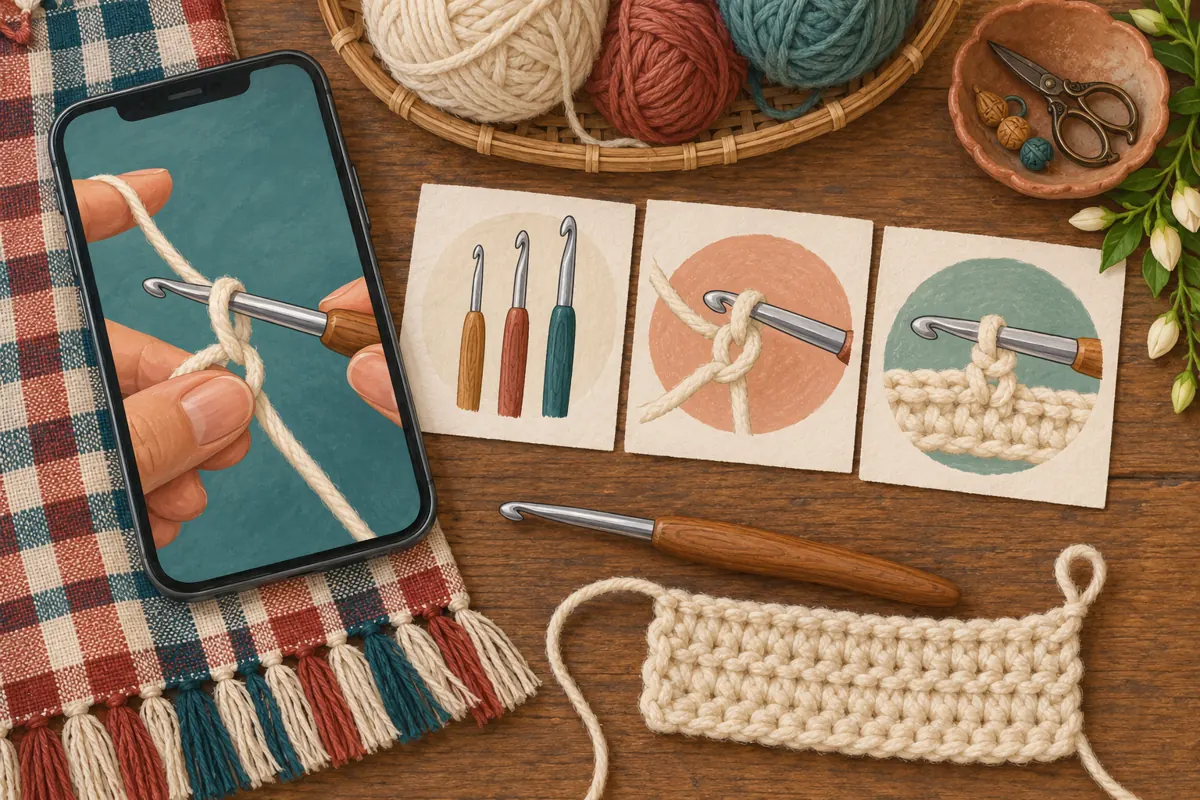
Keep an internal record linking each published lesson to its source recording, approval date, demonstrated materials and responsible staff member. Use a meaningful internal title such as starting-loop demonstration with cream practice yarn. A filename alone will not help a colleague identify a clip forwarded by a customer months later. Retain a reference frame so staff can recognise the lesson visually.
If you discover an instructional error, prepare a corrected lesson and explain the correction wherever the shop directs people to that material. If a buyer sends the older copy, identify the affected step and send the current guidance through the agreed contact route. Avoid a generic response saying only that the video is outdated. The customer needs to know what to do differently. Make someone responsible for checking that staff stop distributing the incorrect source file.
9. Evaluate the SMM-panel listing against the actual objective
The supplied sabysmm.com catalogue includes the exact title “TikTok - Video Views ~ Max Unlimited ~ 10M/Days ~ Instant ~ 𝐍𝐎 𝗥𝗘𝗙𝗜𝗟𝗟”. Its name identifies a video-view listing, but the brief supplies no supporting description. The timing and capacity wording should therefore be treated as catalogue claims, not independently verified promises. Nothing supplied establishes a tutorial-download service, Cambodian audience targeting, genuine learners or an official TikTok affiliation.
TikTok’s Community Guidelines prohibit trading services that artificially boost engagement or manipulate its recommendation system. Do not use artificial views as a shortcut for this workflow. Purchased engagement is not evidence of genuine interest, downloads, sales, ad delivery or Cambodian users. A panel reader can make a useful decision by rejecting a service that does not match the objective. Put available effort into clearer demonstrations, appropriate customer sharing and resolving real questions instead.
10. Review understanding rather than collecting impressive counters
Keep observations close to what they actually show. A buyer saying the hook entry point is unclear identifies an editing problem. A material enquiry identifies a question requiring an answer. A confirmed order belongs in the shop’s sales record. None of these should be inferred merely from a larger view count. If someone says they used a saved tutorial, record that as their report without projecting the behaviour onto everyone who watched.
Common mistakes include testing only on the owner’s phone, placing crucial instructions exclusively in the caption, mixing an enduring technique with a temporary offer and assuming a service title describes local demand. Review the first genuine questions before making another lesson. If several people struggle with the same movement, film a clearer angle or add a deliberate pause. If they ask about materials, improve identification. Let the next edit solve the observed problem.

Frequently asked questions
Should every crochet demonstration be downloadable?
No. Decide according to the viewer’s task and the context the lesson needs. An independently understandable technique may suit offline use. A personalised explanation, unfinished sample or time-sensitive sales announcement may need a different distribution approach. Review the account’s content mix before making the setting decision.
Should the price appear inside the saved tutorial?
Usually, keep the reusable instruction focused on the technique and demonstrated materials. If a price is essential to a specific promotion, clearly identify the offer’s dates and scope. Otherwise, direct viewers to confirm current terms. Staff should be able to distinguish an instructional example from an active quotation.
What should staff do when a buyer sends an old video?
Identify the demonstration using the internal reference image and materials record. Explain whether the technique remains applicable, then clarify any changed product or offer details. If the instruction itself is wrong, identify the exact correction and provide the current lesson. Do not assume the buyer has seen newer posts.
Can a TikTok video-view service prove that people kept the guide?
No. The supplied listing contains no description establishing downloads or learner behaviour. A view-related service record cannot demonstrate that a person saved the lesson, understood it or wanted the materials. Keep service claims separate from customer reports, observed questions and confirmed orders.
How can a small shop assess usefulness without a complicated report?
Keep a short review note containing the lesson identifier, recurring questions, unclear steps and resulting edits. Record confirmed purchases separately. This gives the next staff member enough context to improve the tutorial without converting a few anecdotes into a claim about the whole audience.
Explore the current service catalogue, create an account, or ask a specific question through support tickets.
- TikTok Help Center: Manage video downloads
- TikTok Help Center: Download content
- TikTok Community Guidelines: Deceptive Behavior and Fake Engagement
Prepared with AI assistance. Illustrations explain the workflow and do not represent customer results.