21/10/2026 11:34
Quote Sent or Work Confirmed? Telegram Chat Tags for Cambodian Custom-Mirror Shops

A customer asks about a round mirror, receives a quotation and replies with a smiling sticker. Has the shop won an order, or is the customer still comparing options? For Cambodian custom-mirror businesses promoting their work through social media, that distinction matters more than a busy inbox. Telegram chat tags can help staff spot the next action, provided each label has a clear meaning. This workflow connects promotional enquiries to practical follow-up without treating a conversation, a quotation or purchased engagement as a confirmed sale. The shop and customer situations below are hypothetical.
1. Start with the decision your inbox must support
Imagine a hypothetical mirror workshop in Phnom Penh posting examples of bathroom and salon mirrors. Messages arrive asking about frame finishes, measurements, collection and installation. Some customers send complete specifications; others send only a room photograph. The owner needs to know which conversations require a question, which need a quotation and which have actually become work.
Define the purpose of tagging as deciding the next action. Avoid labels such as “good customer” or “almost sold,” which depend on personal impressions. A useful label answers a practical question: what must happen before this enquiry can move forward? This makes the system usable by someone who did not handle the first conversation.
Before changing settings, review several recent enquiries and identify where progress stopped. If most stalls involve missing dimensions, make that visible. If customers repeatedly ask whether installation is included, improve the promotional post and quotation wording as well as the inbox.
2. Understand what Telegram tags actually represent
Telegram’s official Introducing Telegram Business announcement describes colored chat labels for Business or Premium users, based on the chat folders those conversations belong to. It also states that custom chat folders are available to all Telegram users. The practical implication is that a tag reflects how you organize a chat; it does not independently establish the customer’s purchasing status.
Check the folder and tag controls available in your current app and account before planning around colored labels. Create a small set of folders, add a test conversation and inspect how its label appears in your normal chat list. Use names that remain understandable without their colors. Staff should not need to remember that teal means a quotation is waiting.
Treat the setup as a manual working aid. This article does not assume automatic status changes, payment checking or a shared sales dashboard. Keep the supporting order details in the shop’s existing records, where they can be reviewed independently.
3. Give each status an entry rule
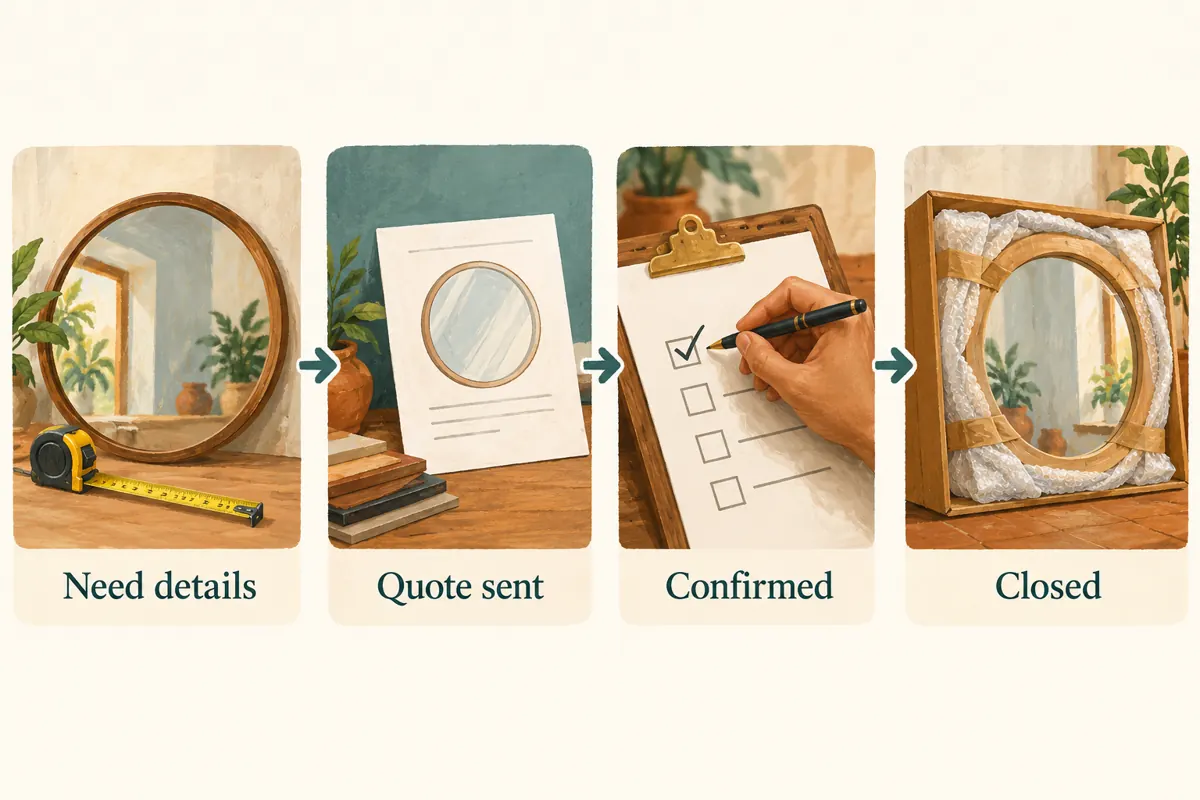
A workable starting set is “Need details,” “Quote sent,” “Confirmed” and “Closed.” Define Need details as an enquiry missing information necessary for the next decision. Quote sent means the customer has received an identifiable quotation for a defined specification. Confirmed means the shop’s stated acceptance conditions have been met. Closed means no further action remains on that enquiry.
Write those acceptance conditions before using Confirmed. For a hypothetical shop, they might require agreement on dimensions, frame choice, collection or installation scope, and any deposit required by its own policy. Do not apply those conditions universally: each business must describe its actual process. A friendly response or request for a discount does not satisfy them.
Closed needs an outcome note. A completed collection, a declined quotation and an abandoned enquiry can all require no further action, but they are different results. Record the reason separately so a tidy inbox does not turn unsuccessful enquiries into apparent sales.
4. Ask for the missing detail before changing the tag
Consider a hypothetical customer who sends a photograph of an empty wall and asks for a price. The conversation belongs in Need details until the shop has enough information for its next step. A useful reply requests the desired mirror dimensions, preferred shape and whether the customer wants collection or a discussion about installation. Ask only what the current decision requires.
Keep measurement questions precise. “How wide?” may refer to the available wall, the glass or the outside of the frame. State which measurement you need and ask the customer to identify the units. Do not infer dimensions from a photograph or promise that a pictured wall is suitable for mounting.
Use the customer’s preferred language for the conversation. A Cambodian team may choose Khmer folder names even when product codes use English. Agree on one internal meaning for each status, so translating a label does not change its acceptance rule.
5. Move a conversation only when the evidence changes
When the required details arrive, prepare the quotation and identify the specification it covers. Once it has actually been sent, move the conversation to Quote sent. Remove the previous stage assignment when appropriate, so an old label does not compete with the current one. Check the latest messages before making that change.
A hypothetical customer might accept the frame color but then request a larger mirror. That is a revised specification, not acceptance of the earlier quotation. Keep the enquiry in the stage that represents the unresolved decision, and record which quotation remains current. If the new dimensions require another estimate, the old price should not quietly carry forward.
After confirmation, send a clear customer-facing summary of what was agreed. The internal tag supports staff navigation; the written agreement supports the transaction. If a customer later cancels or changes the scope, update the underlying record and then revise the label to match.
6. Handle two projects in one conversation
A chat-level status becomes less precise when one customer discusses multiple jobs. In a hypothetical example, a salon owner confirms a rectangular reception mirror while still considering a round mirror for another room. Marking the whole conversation Confirmed could make staff overlook the second quotation. Marking it Quote sent could hide the confirmed work.
Give each project a simple reference in the order record and use that reference in replies. Record the status, specification and next action separately for each mirror. Choose a consistent chat-level convention, such as showing the stage needing attention, with a note that the conversation contains multiple projects.
If overlapping stages become common, keep Telegram tags as navigation and manage project status in a separate register. Do not create an elaborate combination of colors to encode every possible situation. The useful test is whether another authorized staff member can identify the next task without guessing.
7. Prepare the enquiry route before promoting the post
A promotional mirror photograph should give a prospective buyer enough context to start a useful conversation. Explain whether it shows a sample or an available item, how custom sizing is discussed, and what information the shop needs for a quotation. Mention installation only to the extent the business actually provides it.
Make the call to action specific: ask readers to send the sample reference, desired dimensions and collection or installation preference. This is more actionable than a vague invitation to message for details. Keep private room photographs and customer addresses out of public promotional examples unless there is appropriate permission.
Assign someone to review new enquiries during the promotion. If nobody can answer specification questions, increasing exposure may simply create a longer queue. Check the Need details and Quote sent folders before starting another promotional push, then decide whether clearer content or faster follow-up deserves attention first.

8. Keep SMM panel delivery outside the sales stages
The supplied SabySMM catalogue includes “Telegram - Post Views ~ 1 post ~ 𝐍𝐎 𝗥𝗘𝗙𝗜𝗟𝗟 ~ 100k/days ~ INSTANT”. Its title identifies a single-post view service, but the supplied description is empty. Treat the wording as a catalogue label, not independently verified evidence of speed, audience location or customer intent. Check the current terms and applicable platform rules before considering any purchase.
A service delivery record belongs with the promotional post and panel order reference. It should never move a customer conversation into Quote sent or Confirmed. Purchased engagement is not evidence of genuine interest, sales, ad delivery or Cambodian users. The catalogue example also does not establish that the panel offers enquiry management or Telegram Business setup.
If the objective is more accepted mirror quotations, examine actual customer conversations and completed acceptance steps. A post counter cannot reveal whether someone supplied dimensions, understood installation terms or agreed to a quotation. Keep those questions separate when deciding how to spend the next promotional budget.
9. Review the queue without inventing attribution
At the end of a working session, open each active stage and identify the next action, responsible person and review date. For Need details, check whether the shop asked a clear question. For Quote sent, check whether a promised response or revision is due. For Confirmed, consult the order record for the next production or collection task.
Avoid repeated unsolicited follow-ups. A reasonable review can result in leaving the conversation alone, especially when the customer has said they are still deciding. If the customer declines, record that outcome and close the enquiry rather than keeping it permanently in an optimistic stage.
Record promotional origin only when supported. A customer who identifies a specific post provides useful context; someone who simply appears after a campaign does not prove that campaign caused the enquiry. Use “source unknown” where necessary. Report conversations, quotations and confirmed projects as separate categories, especially when one chat contains several jobs.
10. Fix the mistakes that make tags unreliable
The most common failure is changing labels from memory. Staff remember a positive conversation and mark it Confirmed without checking the final specification. Another failure is leaving old stage assignments in place after a transition. A short review of the latest agreement prevents both problems more effectively than adding extra colors.
Avoid using unread status as a substitute for a business stage. A message may have been read while the measurement question remains unresolved. Likewise, a long conversation can still be only an enquiry. Neither message volume nor friendliness tells the shop whether work has been accepted.
Review the system after it has been used on real enquiries. Merge labels that lead to the same action, clarify rules that staff interpret differently and keep exceptions in project notes. Retain the smallest set of stages that supports dependable decisions. A simple system maintained consistently is easier to trust during a busy promotional period.

Frequently asked questions
Do we need colored tags to start this workflow?
No. Telegram documents custom folders for all users, while its colored chat labels are associated with Business or Premium. You can start by agreeing on stage definitions and organizing conversations into folders. Check the controls in your account before deciding whether the colored display adds enough convenience for your team.
Should a payment screenshot move a chat to Confirmed?
Only after the shop completes its actual checks. A screenshot alone should not replace verification in the business’s payment records, and payment does not resolve an unclear size or frame specification. Apply the full acceptance rule you defined, then update the project record and chat stage.
Can the same customer be counted twice in a campaign report?
One customer can have multiple projects, but the report must identify what it counts. Report unique conversations separately from quotations and confirmed projects. If two mirrors are separate jobs within one chat, record that relationship instead of presenting them as two newly acquired customers.
What should we do when a customer returns after an enquiry was closed?
Read the new request and reopen the appropriate stage. Recheck the specification, availability and quotation terms instead of assuming the previous offer still applies. Preserve the earlier closure reason in the project history so staff can understand what changed.
Will buying Telegram post views help these labels identify serious buyers?
No. View delivery cannot establish the intention or location of a person contacting the shop. The labels become useful through reviewed conversation evidence and clear acceptance rules. Evaluate genuine enquiries on their content, and keep any purchased engagement separate from claims about demand or sales.
Explore the current service catalogue, create an account, or ask a specific question through support tickets.
Prepared with AI assistance. Illustrations explain the workflow and do not represent customer results.