20/10/2026 21:30
Should Trade Prices Be Public? Telegram Channel Planning for Cambodian Catering-Equipment Shops

A useful product demonstration can attract both a household buyer seeking one serving tray and a caterer asking about a larger order. Those visitors need different information. For a Cambodian catering-equipment shop, putting every quotation into the same Telegram channel can create confusion about quantities, delivery and who qualifies for particular terms. Hiding every product post, however, gives unfamiliar buyers little reason to enquire. The practical solution starts with deciding what each audience should see. This guide explains how to separate public product information, shared trade updates and individual quotations, then assess whether an SMM panel request belongs anywhere in that workflow. All shop scenarios below are hypothetical; they illustrate decisions rather than customer results.
1. Decide what the channel must accomplish
Begin with a business question: should this channel help strangers understand the equipment, or help established trade buyers follow relevant updates? A public catalogue can explain tray dimensions, lid styles, cleaning considerations and what a set includes. A trade channel might distribute replenishment notices or common ordering conditions. A quotation addressed to one buyer has a different purpose again.
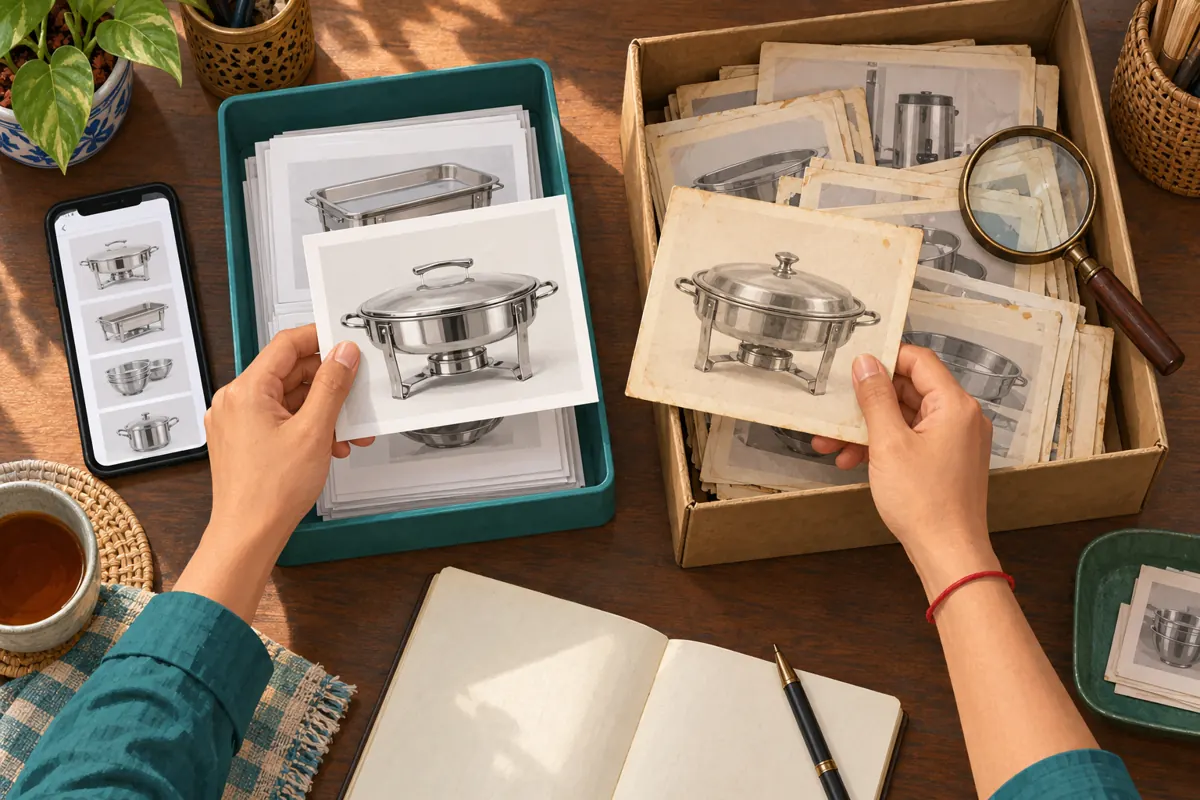
In a hypothetical Phnom Penh shop, a short demonstration shows how a chafing-dish lid opens. That demonstration is suitable for broad promotion. A notice about ordering replacement inserts in cartons may suit trade buyers. A negotiated delivery arrangement for one catering company belongs in that company's conversation. Write these three purposes down before changing channel settings. If the team cannot explain why a second channel needs to exist, start with a public catalogue and individual enquiries instead.
2. Understand the public and private distinction
Telegram's Channels FAQ explains that public channels have usernames and can be found through Telegram search. Private channels require an invitation link or addition by the owner. This makes channel type an access decision. It does not establish whether someone is a caterer, whether they can receive wholesale terms, or whether they intend to purchase.
Choose private access when you have a defined audience and a reason to manage admission. Avoid describing it as a confidentiality guarantee: people can repeat information they have seen. A trade catalogue should therefore contain material suitable for everyone admitted. If one buyer must not see another buyer's terms, a shared private channel does not solve that problem. Keep individual terms in the relevant business conversation and limit the information included to what that transaction needs.
3. Sort each post into one of three destinations
Use three practical categories during drafting. Public information explains the product and the shop's ordinary buying process. Shared trade information applies to the whole intended trade audience. Individual information concerns a particular buyer, delivery, quotation or agreement. Classify the complete post, including its photographs and attachments, rather than judging only the opening sentence.
For example, a hypothetical photo of stacked trays appears harmless until a delivery label identifies a customer's venue. Make a clean promotional version before posting it publicly. Likewise, a general carton-ordering guide can belong in a trade channel, while a screenshot containing a buyer's negotiated discount cannot. When a draft mixes categories, split it into separate messages. This also improves clarity: readers can learn about the equipment without interpreting another business's circumstances as the shop's standard offer.
4. Give the public post enough substance
A public post should answer useful questions before asking someone to contact the shop. Show the equipment clearly, identify the model or internal product reference, explain included components, and distinguish available information from details that need confirmation. If you omit prices because the offer depends on quantity or transport, explain what information the buyer should provide for a quotation.
A hypothetical caption could say: “This demonstration shows the tray, frame and lid together. Ask us to confirm the contents of the set you need. For a quotation, send the product reference, quantity and delivery area.” Adapt the published wording to the audience's language, including Khmer where appropriate. For Cambodian deliveries, request the province or district first if that is enough to assess the enquiry. A full address can wait until the transaction requires it.

5. Review the archive before admitting buyers
Telegram states that new channel subscribers can see the channel's message history. Review that history before inviting a new trade audience. A channel created for a handful of familiar customers may contain assumptions, attachments or old offers that make little sense to later arrivals. Changing the channel's purpose without reviewing its archive leaves those earlier messages carrying unintended meaning.
Check old captions, documents and product photographs for expired conditions, customer identifiers and discontinued configurations. Explain which catalogue version is current and how buyers should confirm availability. Preserve necessary business records in the shop's appropriate record system before removing unsuitable channel material. If the archive contains extensive individual negotiations, creating a clean trade channel may be simpler than repurposing it. Do not treat deleting a channel post as evidence that nobody retained its information elsewhere.
6. Define a modest admission process
Write a short eligibility rule that staff can apply consistently. For a hypothetical shop, the trade channel might serve businesses that regularly purchase catering equipment, while occasional buyers continue through ordinary enquiries. Ask only what helps make that distinction, such as business activity and the products of interest. Avoid collecting identity documents merely to distribute a catalogue.
Telegram's official invite documentation describes optional expiry dates, usage limits and administrator approval for private invitations. Choose the controls that match the actual situation. An invitation intended for a particular conversation should not become a permanent link pasted into every promotional caption. Record who manages invitations and what happens when someone cannot enter. A helpful response explains the alternative enquiry route; it should not leave a genuine prospective buyer wondering whether the shop is still operating.
7. Keep trade terms understandable after entry
A trade channel needs a clear explanation of what membership provides. State whether it distributes product updates, general carton conditions or ordering notices. Explain that a post is not a reservation unless the shop explicitly confirms one. If terms depend on quantity, product combination or delivery area, make those dependencies visible rather than relying on staff to explain them after a misunderstanding.
In a hypothetical Siem Reap enquiry, a caterer requests several matching serving sets for an upcoming event. The channel can supply the standard product reference and ordering process. Staff should separately confirm the requested configuration, quantity, timing and transport before issuing a quotation. Keep the quotation identifiable and dated in the business record. Channel membership should not silently promise credit, preferential stock allocation or an unchanged price across future orders.
8. Apply a clear stop rule to SMM panel requests
The supplied SabySMM catalogue reference includes “Telegram - Post Views ~ 1 post ~ 𝐍𝐎 𝗥𝗘𝗙𝗜𝗟𝗟 ~ 100k/days ~ INSTANT”. Its title identifies a post-view service, but the supplied description is empty. The title alone does not establish private-channel compatibility, delivery reliability, viewer identity or Cambodian audience origin. Treat its timing and volume wording as catalogue claims requiring clarification, not independently verified facts.
Do not submit a private invitation link or expose trade terms simply to make a service request possible. If the intended result is qualified catering enquiries, purchased views do not verify that result. Purchased engagement is not evidence of genuine interest, sales, advertising delivery or Cambodian users. Before considering any request, review applicable platform rules and current service conditions. When access requirements or the business benefit remain unclear, stop the order and improve the public product explanation or enquiry process instead.
9. Retire invitations without confusing access and information
Telegram's invite documentation states that revoked links cannot be used to join. Revocation addresses future entry through that link. It should not be treated as a recall mechanism for information already distributed. Review current membership separately when a business relationship changes, and consider whether any shared information now needs clarification.
For a hypothetical shop that accidentally places a trade invitation in a public caption, first remove the invitation from the promotional material and revoke the affected link. Then review the admission situation and the material available in the channel. Replace the public invitation with a normal enquiry route. If an unsuitable quotation was shared, address the quotation itself as well. Simply issuing a fresh link leaves the underlying content problem unresolved. Record the correction so another staff member does not reuse the same promotional draft.
10. Judge the workflow by the quality of enquiries
Telegram explains that channel view counts are approximate and include views of forwarded copies. They should not be read as a list of distinct prospective buyers. For this workflow, more useful observations include whether people identify the product correctly, supply the quantity needed, understand the delivery question and receive a clear next step.
Review a small set of genuine enquiries after the workflow has been used. Note recurring misunderstandings without copying unnecessary customer details into a marketing report. If people repeatedly mistake a complete set for a tray-only offer, revise the public demonstration. If trade buyers assume every notice reserves stock, revise the channel introduction. Common mistakes include hiding basic specifications, broadcasting individual discounts and treating admission as purchase intent. Correct the specific source of confusion before adding more promotional activity.

Frequently asked questions
Does a small equipment shop need both public and private Telegram channels?
Only if each has a useful ongoing purpose. A public catalogue plus individual quotations may be enough when trade updates are infrequent. A second channel creates additional work: someone must maintain its archive, explain its terms and manage access. Create it when several suitable buyers genuinely need the same recurring information.
Can wholesale prices be published publicly?
Yes, if the shop intends the offer to be public and explains its conditions clearly. Specify the product, quantity basis, included components and any delivery exclusions that matter. Private access is useful for managing an audience, but it is not automatically necessary for every trade price. Buyer-specific negotiated terms require separate handling.
Is a private trade channel appropriate for customer invoices?
A shared trade channel is generally the wrong destination for individual invoices. Its members do not all need another buyer's transaction details. Send the relevant document through the agreed customer communication route and keep the business copy in the appropriate record system. Use the channel for information that applies across its intended audience.
Should the shop make its trade channel public to accommodate a panel service?
The channel's audience and content should determine its access settings. A service request is not a sound reason to expose material intended for a limited audience. If compatibility is uncertain, do not proceed. Prepare a separate public product explanation when that serves a real promotional purpose, without copying private quotations into it.
How can staff tell whether the separation is helping?
Look for clearer conversations: buyers identify the correct equipment, understand what information to send and receive terms relevant to their own request. Keep brief notes on repeated questions and revise the responsible post. These observations can guide improvements, but they do not by themselves prove that the channel arrangement caused additional sales.
Explore the current service catalogue, create an account, or ask a specific question through support tickets.
Prepared with AI assistance. Illustrations explain the workflow and do not represent customer results.