20/10/2026 07:42
Storage Space or Setup Steps? YouTube Title Testing for Cambodian Ladder Shops

A folding-ladder demonstration can answer several useful questions: where the ladder fits when folded, how it opens, and which model the customer is seeing. Choosing the title means deciding which question to introduce first. For a Cambodian hardware shop, that choice deserves more thought than adding a stronger sales adjective. This guide uses a hypothetical Phnom Penh shop to explain a practical YouTube title-testing workflow, from checking the footage to deciding what the result supports. It also explains why an SMM-panel service listing cannot establish which title helps genuine customers. All shop scenarios and suggested titles below are illustrative, not reported customer results.
1. Define the decision before writing alternatives
In the hypothetical shop, staff disagree about the best introduction to an existing folding-stepladder demonstration. One person wants to lead with storage because shoppers ask whether it fits behind a cabinet. Another wants to lead with opening because customers ask how the hinge works. Write the decision as a question: should this video's title introduce folded storage or the opening demonstration? That gives the team a specific comparison to prepare.
Keep the decision within the video's scope. This exercise does not decide which ladder to stock, whether customers can afford it, or whether delivery outside Phnom Penh is practical. Those questions require different evidence. Assign one employee to prepare the alternatives and another to check their accuracy against the footage. Agree beforehand that either title must remain useful even if the comparison produces no decisive result.
2. Check that the footage earns both titles
Watch the complete video and make a short evidence note for each proposed angle. A storage-focused title needs a clear view of the folded product and enough context to understand what is being measured. An opening-focused title needs the relevant movement to be visible. If a hand blocks the mechanism or the folded ladder appears only briefly in the background, the title would promise more than the demonstration delivers.
For a ladder, distinguish a product demonstration from a complete safety lesson. Use the manufacturer's instructions for the actual model when planning the demonstration; do not invent load limits or suggest suitability for every task. A title about opening should not imply that a short clip covers all operating precautions. If one angle lacks supporting footage, postpone that alternative and improve the video before testing its wording.
3. Draft two genuinely different, accurate introductions
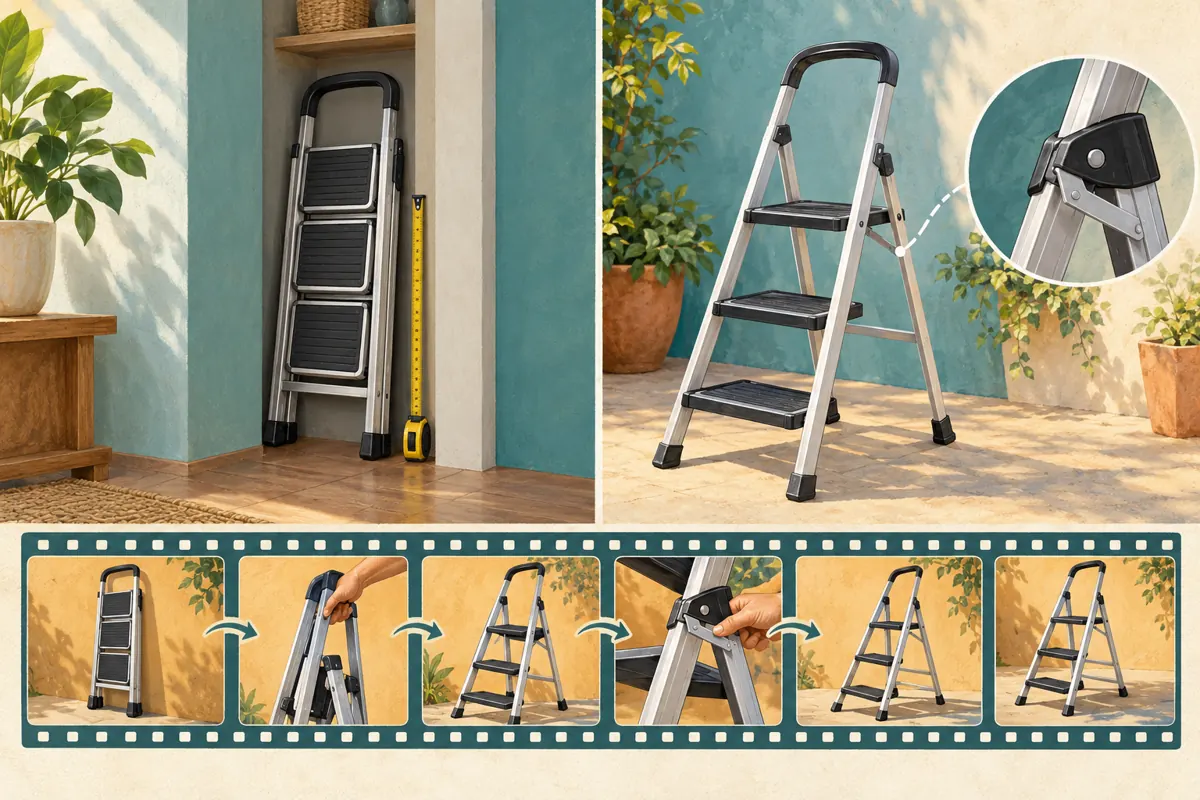
For the hypothetical video, an English planning pair could be 'Folding Stepladder: See Its Folded Storage Size' and 'Folding Stepladder: Watch the Opening Demonstration.' Both name the same product, while each leads with a different viewer question. These are draft examples, not recommended claims for an unseen product. Add a model identifier only when it helps distinguish the ladder and matches the item shown.
Avoid turning the comparison into a contest between a factual title and an unsupported promise such as 'The Safest Ladder for Every Home.' Also avoid changing only punctuation and calling that a new customer proposition. Ask a colleague what each draft leads them to expect. If their answer differs from what the video actually shows, rewrite the title. The goal is a clear choice between two truthful introductions.
4. Keep language and visual context consistent
For a Khmer-speaking customer audience, prepare both final alternatives in natural Khmer and have a fluent colleague read them aloud. The English examples here are planning aids. Keep the product term and model spelling consistent between alternatives. Testing a Khmer storage title against an English setup title would combine two questions: which topic works better and which language the viewer understands. That makes the shop's own interpretation harder.
Use one accurate thumbnail for this title-only exercise. Choose a frame that represents the whole demonstration without making either title misleading. Check the title alongside that image on a phone-sized preview, particularly where a long model name might push the useful wording out of view. Keep a copy of the approved text outside the upload screen so an employee does not have to reconstruct it from memory during handover.
5. Check access and start the native comparison
YouTube's official guide places A/B testing in desktop Studio and requires advanced features. Shorts, private videos, and videos marked for children or mature audiences are ineligible. For an eligible existing video, open Content, select the video, choose A/B Testing beside the title or thumbnail, select Title only, enter the alternatives, and click Done. Up to three alternatives are supported; this workflow uses two.
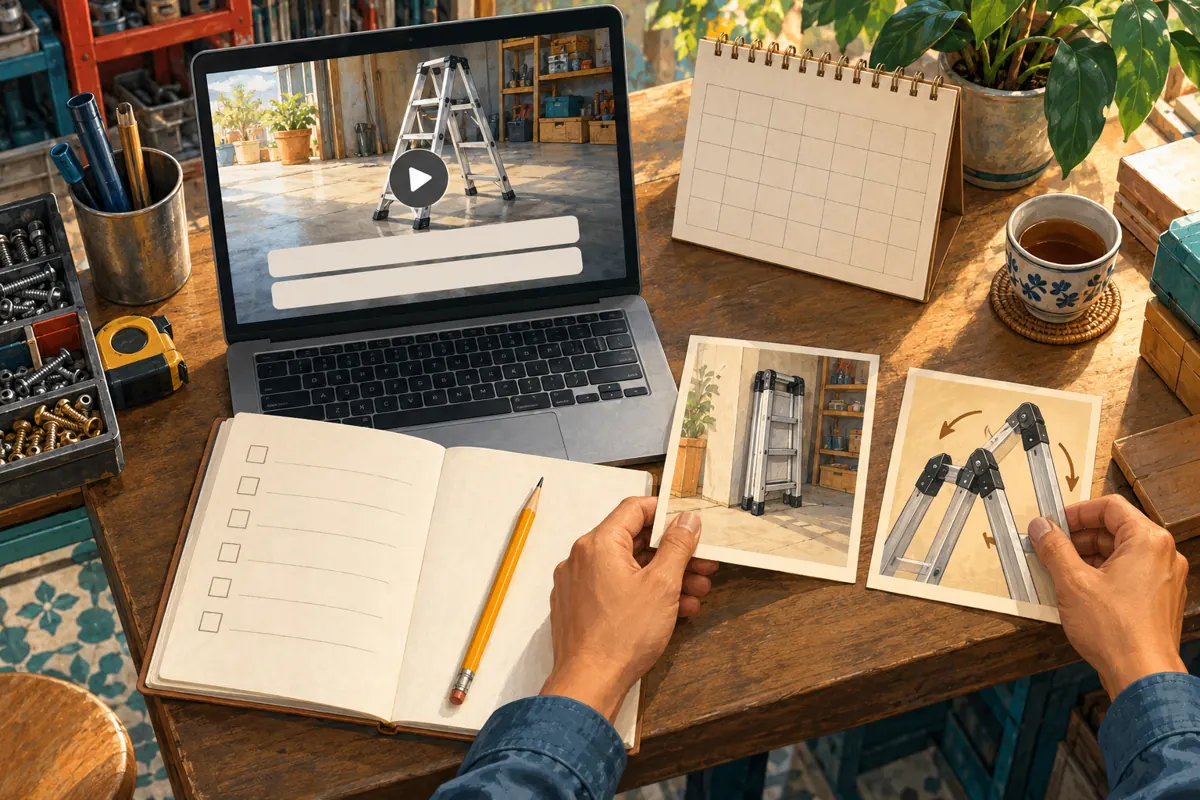
Before starting, record the video URL, exact alternatives, unchanged thumbnail, responsible employee, and review date. YouTube says tests can take up to two weeks; changing the title or thumbnail stops the test. Schedule the exercise when the product information is stable. If the shop urgently needs to correct an inaccurate claim, accuracy takes priority: make the correction and document why the planned comparison was interrupted.
6. Separate the experiment from other promotion decisions
Create a small activity note covering the test period. Record when the team shares the video through an existing customer channel, includes it in a relevant product enquiry, or changes the offer surrounding it. Such events do not automatically invalidate a native comparison, but they matter when someone later tries to explain overall traffic or enquiries. Keep the note factual: what happened, where, and when.
Do not ask employees to repeatedly watch, click, or favour one version to help it win. Continue answering genuine questions normally. If a customer needs folded dimensions immediately, provide the verified information rather than making them wait for the test. The experiment concerns how the video is introduced. It should not delay customer service or become an excuse to generate activity that the team later mistakes for independent interest.
7. Apply a clear SMM-panel boundary
The supplied public catalogue includes 'Youtube - Views ~ MIXED AFRICAN ~ Max 500K ~ 𝐍𝐎 𝗥𝗘𝗙𝗜𝗟𝗟 ~ Start 0-6hrs'. Its title identifies a views offering, but the supplied description is empty. The wording does not independently verify audience location, delivery method, timing, or suitability for this Cambodian shop. It is included here as an example of a listing to evaluate, not a recommendation or confirmation of its claims.
Purchased engagement is not evidence of genuine interest, sales, ad delivery, or Cambodian users. YouTube prohibits artificial metric inflation and warns that a hired promoter's actions can affect the channel. Do not buy views to force a title-test result. When evaluating any panel offering, require a clear explanation of what it actually does and assess platform compliance first. If that cannot be established, do not proceed. A service order record cannot answer the editorial question this workflow is testing.
8. Read the outcome at the right level
YouTube's results are based on watch time share and can report Winner, Performed Same, or Inconclusive. Review the report in the video's Details or Analytics Reach area. Without a clear winner, the first uploaded option becomes the default. A platform-selected result does not establish which title produced Cambodian buyers.
Write a narrow conclusion in the shop's notes. For example, a hypothetical decision could say: 'The storage introduction was selected in this test; keep it for this video and review whether customer questions remain clear.' If the outcome is inconclusive, choose the accurate title that best describes the video's strongest explanation. Do not rewrite uncertainty as failure or announce that one wording has proven universal appeal. Keep the original alternatives so the reasoning remains understandable later.
9. Review customer usefulness separately
After the test, examine the substance of genuine enquiries. Are people asking for folded depth, delivery arrangements, a different height, or clarification about the model? Record these as questions received, without assuming which title each person saw. A customer who contacts the shop may have discovered it through a referral or an older post. Unless there is reliable attribution, the enquiry cannot be assigned to a particular title.
Use those questions to improve the next piece of content. Repeated confusion about folded depth might justify a dedicated measurement demonstration. Questions about availability might call for clearer stock information beside the video. Keep personal details out of the editorial log. The useful record is the unresolved product question and the proposed response. This gives the shop practical learning even when the title comparison itself offers no decisive answer.
10. Avoid shortcuts that create misleading conclusions
A common shortcut is to use one title for several days, replace it, and attribute every later change to the new wording. That before-and-after observation also includes different days, viewers, and promotional activity. Treat it as an observation with multiple possible explanations. Another mistake is changing the title, thumbnail, opening footage, and price offer together, then claiming to know which individual change mattered.
Do not generalize one video's result across the catalogue. A title emphasizing storage for a household stepladder may tell you little about a demonstration of a different ladder type. Also avoid declaring success from a screenshot of a rising public counter. Save the actual test conclusion and the final editorial decision instead. If the shop wants another experiment, write a new question that addresses a real uncertainty rather than repeating tests until a preferred answer appears.
11. Turn the decision into a usable staff handover
Close the exercise with a short handover containing the video link, chosen title, reason for choosing it, and any unresolved content issue. Tell staff which product question the video answers well and which details they must still confirm directly. For the hypothetical shop, that might mean using the demonstration to introduce folding while checking the customer's available storage space separately.
Update customer-facing references that quote the old title when doing so improves clarity. Keep a dated note rather than replacing the entire history with the latest wording. Future staff should be able to see whether the title was selected through a completed test, chosen after an inconclusive outcome, or changed to correct a factual problem. Those are different editorial decisions, and preserving the distinction prevents a routine update from becoming an invented marketing success story.
Frequently asked questions
Should a small Cambodian shop test every demonstration?
No. Prioritize a video where staff have a meaningful disagreement about the customer question to introduce. A clear, accurate title may already be sufficient for other videos. Preparation and review take time; use them where the decision could improve how customers understand an important product explanation.
What if the A/B testing control is unavailable?
Check the official eligibility guidance and the video's settings. Do not change an accurate audience classification merely to obtain access. You can still ask colleagues to explain what each proposed title promises, select the clearer wording, and record that this was an editorial review rather than a measured audience experiment.
Can we test a title that promises dimensions when the video only shows folding?
Only if the video actually provides the promised measurement information clearly. Otherwise, revise the title or create the missing explanation first. A plausible product benefit is not enough: the viewer should receive the answer suggested by the wording without needing to guess or request essential missing information.
Does an inconclusive outcome mean the video needs paid views?
No. It means the comparison has not established a clear preference. Choose the most accurate, useful title and identify any remaining content questions. Purchasing engagement would not establish local demand or explain customer understanding, and artificial inflation conflicts with YouTube's rules.
Can the shop use the selected title in other promotions?
Yes, if it accurately fits the new context. Recheck any accompanying image, offer, and destination. Describe it internally as the title selected for that particular video. Avoid presenting the selection as proof that the same wording will improve enquiries, orders, or performance on another platform.
Explore the current service catalogue, create an account, or ask a specific question through support tickets.
Prepared with AI assistance. Illustrations explain the workflow and do not represent customer results.