21/10/2026 19:05
Delivery Route Confirmed? Telegram Scheduled Posts for Cambodian Icebox-Rental Shops

A scheduled promotion can arrive at exactly the wrong moment: the shop is loading iceboxes, the delivery route has changed, and the announcement still promises availability. For a Cambodian rental business serving market vendors, family gatherings or small events, the challenge is keeping the message aligned with what staff can actually arrange. Telegram scheduling can help organize publication, but someone must still verify the offer. This workflow connects an operational check, a scheduled channel post and a clear enquiry process. It also explains where an SMM-panel service fits—and why a larger view counter cannot confirm demand or delivery capacity.
1. Define the decision the announcement should help customers make
Start with one practical question: can this customer request an icebox for this date and location? An attractive photograph alone cannot answer it. Your announcement should identify the rental item, the relevant service date, whether collection or delivery is offered, and what information the customer should send. Keep size choices understandable, using the shop’s verified dimensions or model names rather than guessing how many drinks a box holds.
For a hypothetical Phnom Penh shop, the intended response might be an enquiry containing the event date, required box size and delivery area. That is more useful than an unexplained reaction. The post should also distinguish an availability request from a confirmed reservation. Decide who can confirm a booking and what that confirmation includes before inviting people to respond.
2. Separate stable information from promises that can expire
Some details remain useful for weeks: how the lid closes, how customers should return the box, or which dimensions to check before transport. Other details can become wrong within an afternoon: available units, delivery coverage, collection hours or the last time to request a particular route. Build the promotional message around this distinction. A stable product explanation is easier to prepare ahead than an announcement tied to tomorrow’s vehicle availability.
Mark each changing detail in the working draft and give it an owner. The person managing bookings checks availability; the person arranging transport checks the delivery promise. If either remains uncertain, keep the announcement as a draft or phrase it as an invitation to check availability. Do not let a confident headline override a cautious sentence buried below the photograph.
3. Schedule publication only after choosing a review point
Telegram documents scheduling through the Send menu: hold Send, choose Schedule Message and select a future time. Scheduling also works in Saved Messages for personal reminders. The exact interface should be checked in the app you use. These functions can support the workflow, but neither performs the shop’s operational review. See Telegram’s [scheduled messages announcement](https://telegram.org/blog/scheduled-reminders-themes).
Choose the review point first, then the intended publication time. Leave enough room between them to contact the driver, revise the offer and check the result. If staff will be too busy to perform that review, schedule an evergreen explanation instead of a time-sensitive delivery promise. Write the full date and intended Cambodia local time in the internal plan so a colleague can check the selection without interpreting words such as tomorrow or later.
4. Build an announcement that survives being read later
Put the service date and main condition near the beginning. Follow with the actual item shown, what the rental includes, how delivery is assessed and the next step. If ice, transport or collection is separate, say so whenever that distinction affects the offer. Do not imply that every accessory in a styled photograph comes with the rental. Use Khmer for customers who need it and review any second-language version for the same conditions.
A hypothetical draft could say: “Icebox rental enquiries for Saturday, 14 November. Send your preferred size, rental period and delivery area to our booking contact. Delivery and availability require confirmation; an enquiry does not reserve a box.” This is a structure to adapt, not an offer from an actual shop. Add only verified charges and terms. An explicit date helps someone who encounters the announcement after its intended publication day.
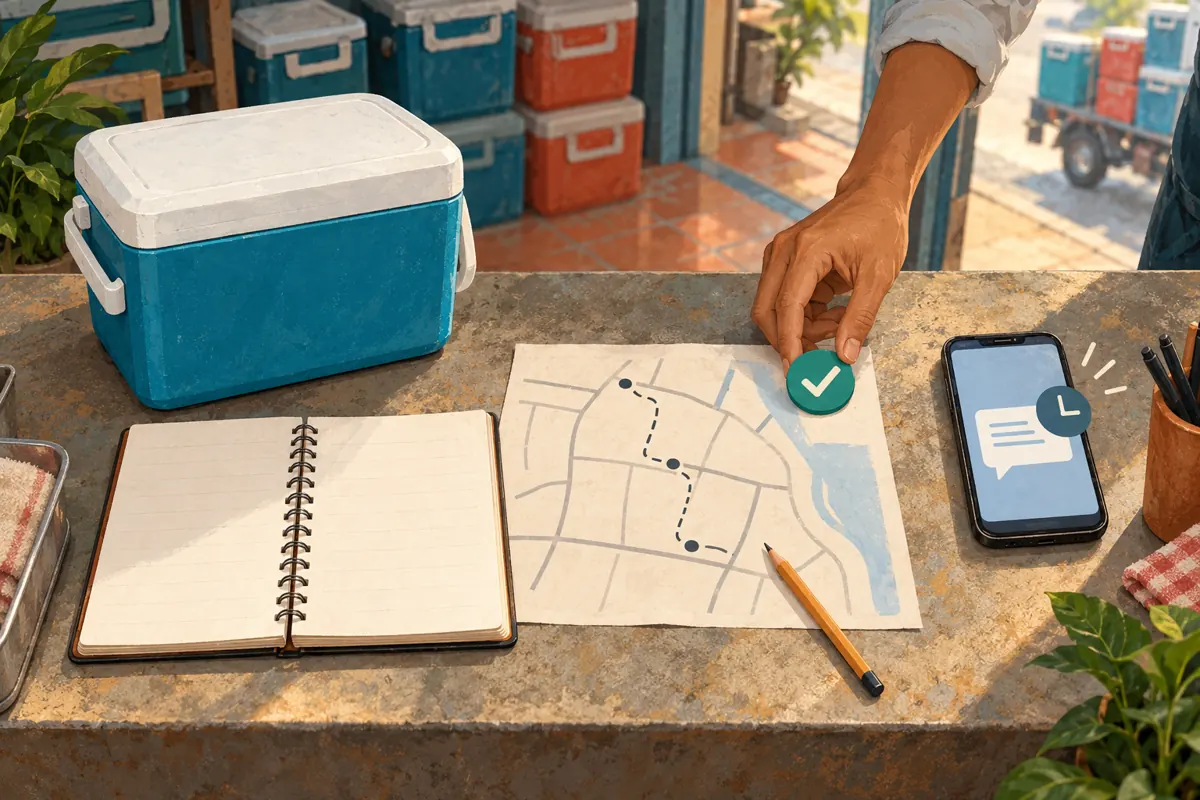
5. Use a short release check with a clear stop decision
At the review point, compare the draft against the booking record and the delivery plan. Confirm that usable boxes—not merely boxes physically present—are available. Returned equipment may still need inspection or cleaning. Then check that the proposed delivery arrangement is something staff can explain consistently. Finally, confirm that the person handling enquiries will be available when the post appears.
Use three decisions: release, revise or hold. Release when the offer is accurate. Revise when a narrower offer remains useful, such as collection only. Hold when an important fact is unresolved. A hypothetical shop expecting a vehicle back in the morning should not announce an afternoon delivery round merely because the vehicle usually returns on time. Keep the message out of automatic publication until the uncertainty is resolved.
6. Review the queued message as its own piece of work
After scheduling, inspect the queued item rather than relying on the original draft. Check the destination channel, selected date, time, photograph and caption together. A correct caption attached to the wrong cooler photograph can create size confusion. A correct message placed in the wrong channel can reach readers who cannot use the delivery offer. Record who reviewed the queued version so colleagues know which copy was approved.
Keep the queue short enough to inspect when circumstances change. Before preparing another reminder, look for an existing announcement about the same rental date. If the route or availability changes, review every pending message that depends on it. Use the controls available in your app to correct or remove affected items, and verify the resulting queue. Changing a planning note does not establish that the scheduled message changed.
7. Connect the live post to a workable booking conversation
When publication is due, assign someone to check the actual channel post. Confirm that the image opens, the conditions are visible and the stated contact route works. Read it on a phone without expanding every possible element. The first visible lines should make sense on their own. If a necessary condition is difficult to find, simplify the presentation before sharing the post more widely.
In the booking conversation, ask for enough information to assess the request without collecting unnecessary personal details publicly. Start with the rental date, duration, size and general delivery area. Request a precise address privately when needed. Repeat the agreed item and delivery arrangement in the confirmation. If someone arrives with an older announcement, check the current offer instead of treating the old message as proof that availability remains unchanged.
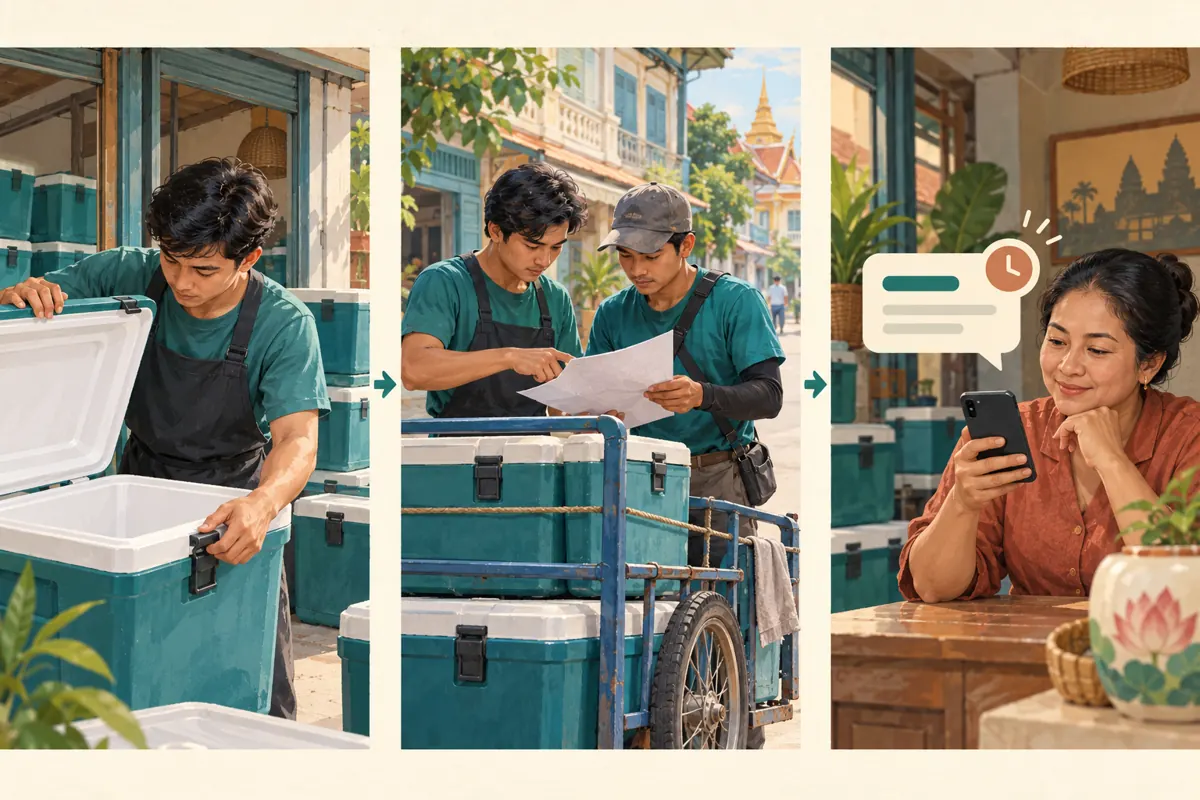
8. Evaluate any SMM-panel service separately from scheduling
The supplied catalogue includes “Telegram - Post Views ~ 1 post ~ 𝐍𝐎 𝗥𝗘𝗙𝗜𝗟𝗟 ~ 100k/days ~ INSTANT”. Its name identifies a post-view offering, but the supplied description is empty. The wording does not independently verify speed, audience origin, user authenticity or suitability for this rental business. It also provides no basis for assuming that the service schedules Telegram announcements or coordinates delivery enquiries.
If considering this listing through SabySMM, first establish whether the proposed use complies with applicable platform rules and whether current service information answers your questions. Do not infer missing terms from the title. Inspect the live post and its actual reference before preparing any request that requires a published destination. Purchased engagement is not evidence of genuine interest, sales, ad delivery or Cambodian users, and it should never be presented as customer endorsement.
9. Measure useful enquiries without treating views as customers
Telegram explains that channel view totals are approximate and include views of forwarded copies. That already limits what a counter can establish about individual readers. It cannot tell this shop whether someone needs an icebox, lives within the delivery area or accepted a quotation. See Telegram’s [Channels FAQ](https://telegram.org/faq_channels).
Maintain a small enquiry log with the requested date, general area, item, outcome and reason a request could not proceed. Record a source only when the customer supplies it or the conversation clearly establishes it. Keep any panel order history separate. If several genuine enquiries misunderstand whether delivery is included, revise that sentence. If customers request dates the shop cannot serve, review availability messaging. These observations can guide improvements without claiming that a view increase caused a booking.
10. Avoid scheduling mistakes that create unnecessary work
A common mistake is preparing a week of offers from one availability check. Another is scheduling follow-ups after the booking deadline simply because the sequence was convenient to create. Build each time-sensitive post around its own valid service window. Avoid vague urgency such as last chance unless a real deadline exists, and remove promotional wording that staff cannot explain to an enquiring customer.
A further mistake is assuming that publication completes the task. The shop still needs to answer enquiries, identify outdated offers and review queued messages when plans change. Give one person responsibility for that final review and name a backup. After the rental period, note which questions the post failed to answer. Use those questions to improve the next announcement rather than repeating the same message with a new date.

Frequently asked questions
Should a shop schedule an offer before the delivery route is confirmed?
Only if the wording remains accurate without that confirmation. An invitation to ask about delivery may be suitable when coverage is still being assessed. A promise of a particular delivery round should wait for verification. If nobody can check the situation before publication, keep that offer as a draft and publish a stable product explanation instead.
What should we do if availability changes after scheduling?
Review the affected queued message immediately and check for related follow-ups. Decide whether to narrow the offer, postpone it or remove it from the queue using the available app controls. Verify the resulting state. If the announcement has already appeared, provide a clear current update and address existing enquiries individually rather than assuming everyone will notice the change.
Does scheduling mean the shop can leave enquiries unattended?
No. Scheduling determines when the message is sent; it does not establish who will assess a delivery request or confirm a reservation. Plan publication around a period when someone can handle the expected conversation. If replies will be delayed, state a realistic response expectation without promising an exact turnaround the team cannot maintain.
Can a Telegram post-view service show whether local renters want the offer?
No. A purchased view total cannot establish Cambodian audience origin, rental intent or willingness to pay. Assess demand through genuine enquiries and clearly recorded booking outcomes. The provided service description contains no supporting audience details, so its title should not be used to fill those gaps or justify claims about local customer interest.
How many future promotions should a small shop queue?
Queue only as many as the team can recheck when bookings or delivery plans change. Stable guidance can be prepared further ahead, while availability promises need a shorter review cycle. Start with one time-sensitive announcement, confirm that the review and enquiry process works, then expand only when ownership remains clear.
Explore the current service catalogue, create an account, or ask a specific question through support tickets.
- Telegram: Scheduled Messages, Reminders, Custom Cloud Themes and More Privacy
- Telegram: Channels FAQ
Prepared with AI assistance. Illustrations explain the workflow and do not represent customer results.