22/10/2026 07:42
Which Filter Guide Did You Send? Telegram Shared Links for Cambodian Water-Filter Shops
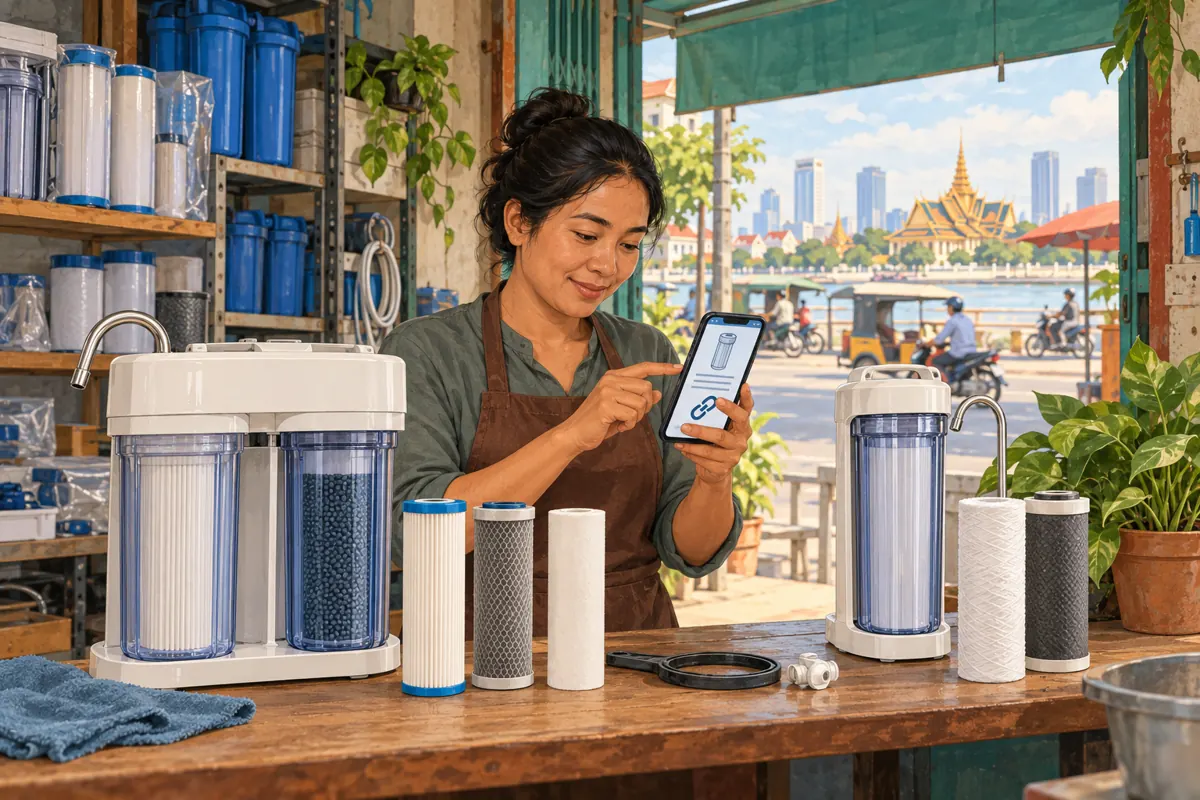
A customer asks for the cartridge guide you shared last month. Your Telegram conversation contains product photographs, supplier brochures, delivery messages and several similar links. Sending the first familiar preview could point them to a different filter model or an outdated catalogue. For a Cambodian water-filter shop, useful social media promotion includes making the information behind a post easy to retrieve and verify. Telegram’s Shared Links feature can help staff locate a previously shared resource. The business still needs a process for deciding whether that resource answers the customer’s question. This workflow connects link retrieval, model checks and clear promotional posts, while keeping SMM panel delivery records separate from evidence of customer interest.
1. Start with the question the guide must answer
Before searching, identify whether the customer wants to recognise a cartridge, read the manufacturer’s maintenance instructions or check whether your shop stocks a replacement. These are different tasks. A product catalogue may help identify a model but contain no maintenance instructions. A maintenance guide may describe a cartridge your shop no longer carries. Choosing the task first prevents a technically valid link from becoming an unhelpful answer.
Consider a hypothetical shop in Phnom Penh selling several similar filter housings. A customer sends a photograph and asks for the guide previously discussed. Staff should request the model code from the accessible product label if the photograph is insufficient. They should not infer compatibility from housing colour or cartridge shape alone. The immediate objective is to identify the correct reference, not to turn an uncertain identification into a sales recommendation.
2. Retrieve links from the relevant conversation
Telegram documents a Shared Links section within Shared Media for finding links exchanged in a chat. Its announcement explains that entries can show accompanying message text or preview information. Telegram’s current technical documentation also lists separate profile tabs for shared links and shared files. This distinction matters: a website address and an uploaded PDF are different kinds of material.
Open the relevant customer conversation, supplier chat or shop channel, then look in its information area for shared media and links. Labels and placement can vary by app version. If you cannot locate the section, use message search within that conversation. Search for the model code or a distinctive guide term rather than a broad word such as filter. If the original guide was uploaded as a document, check shared files instead of assuming a missing link means the guide was deleted.
3. Recover the context around a promising link
Treat each retrieved link as a candidate. Read the accompanying message and, where needed, return to the surrounding conversation. The sender may have explained that the document was for an older model, supplied only as a comparison or awaiting confirmation. A neat preview does not carry every qualification from the discussion. Record what the link was intended to explain before deciding whether to reuse it.
In a hypothetical Siem Reap shop, a supplier shares a general brochure followed by a model-specific guide. Both previews show a similar white housing. A staff member searching visually could choose the brochure and overlook the later clarification. Checking the surrounding messages reveals which resource was approved for that model. This is also a useful handover habit: another employee should be able to understand the selection without relying on the original sender’s memory.
4. Open the destination and confirm the document
Open the actual destination before sending or promoting it. Check the organisation hosting it, the model references inside the document, its language and any revision information. A familiar address can lead to a changed page, a general homepage or an unavailable download. The preview is a navigation aid; it is not confirmation that the destination still contains the same instructions.
Compare the customer’s confirmed model code with the guide’s stated scope. If a guide covers several variants, identify the relevant section and preserve any exclusions. Do not merge instructions from similar-looking products to fill a gap. If the model or revision remains uncertain, ask the supplier or manufacturer for clarification and hold the guide back from promotion. Record the date you checked the destination so colleagues know when the verification occurred.

5. Make access practical for Cambodian customers
Test the guide as a recipient would encounter it. Open it on a phone without relying on the staff account that originally accessed the resource. Check whether it requires a login, requests permission or sends the visitor through confusing redirects. If a document is difficult to read on a small screen, provide a short explanation of what it contains and where the relevant section begins. Avoid promising effortless access before testing it.
For customers who prefer Khmer, write a concise Khmer introduction while retaining the exact product code and manufacturer terminology needed for identification. Have someone who understands the product review translated instructions before using them. A shop-written summary should be labelled as a summary, with the original guide available for reference. Do not silently remove qualifications or convert a general maintenance document into a claim about water quality.
6. Send a guide with a useful explanation
A bare link makes the recipient work out why it matters. Add the product identity, the question it answers and the next step. For example, a hypothetical reply could say: “This is the manufacturer’s guide for the model code you sent. The cartridge identification section is the relevant part. Please confirm that the code on your unit matches before requesting a replacement quotation.” Adapt the wording to the actual document.
Keep document verification separate from stock confirmation. A correct guide does not establish that a cartridge is available today, that delivery reaches a particular location or that a fitting appointment has been booked. If the customer wants to buy, move to a separate confirmation of the exact item and fulfilment details. This keeps a helpful educational response from becoming an accidental commercial promise.
7. Turn repeated questions into one focused promotional post
When several genuine enquiries reveal the same information gap, create a post that addresses it directly. A useful topic might be where to find the model code before requesting a cartridge quotation. Show a shop-owned demonstration unit, explain which identifying information matters and link to the verified guide where appropriate. Avoid including a customer’s private conversation or household details simply because that enquiry inspired the post.
Build the post around one action: send the model code privately for an item check, or open the guide to locate the identification section. Trying to combine maintenance instructions, stock claims, delivery promises and several unrelated links makes the next step harder to follow. A clear guide post can support promotion by reducing uncertainty, but it does not guarantee more reach, enquiries or sales.

8. Evaluate an SMM panel service against that purpose
The supplied SabySMM catalogue includes “Telegram - Post Views ~ 1 post ~ 𝐍𝐎 𝗥𝗘𝗙𝗜𝗟𝗟 ~ 100k/days ~ INSTANT”. Its title identifies a Telegram post-view offering aimed at one post. No additional description was supplied. Treat the timing, volume and refill wording as catalogue labels requiring clarification, not verified performance promises. The listing does not establish who would view the post or whether anyone would open its guide.
For this workflow, ask what problem a panel order would solve. Post views cannot verify a document, identify a customer’s filter or demonstrate that the guide was understood. Purchased engagement is not evidence of genuine interest, sales, official ad delivery or Cambodian users. If the objective is qualified replacement enquiries, the listing alone provides no basis for expecting that outcome. Deferring an order while improving the guide is a reasonable decision.
If a service remains under consideration, review its current terms and relevant platform rules, and clarify the required target before submitting anything. The Telegram promotional post and the external manufacturer guide are separate destinations. Keep their addresses in separately labelled fields. A service named for post views should not be assumed to accept a manufacturer webpage or provide visits to that webpage.
9. Keep retrieval, delivery and customer outcomes separate
Maintain a small guide register with the product code, resource title, destination, document revision where available, last checked date and staff owner. Add a brief note explaining the question the resource answers. This register supports the retrieval workflow; it should not become an unreviewed collection of every supplier link ever received. Retire uncertain entries until someone can verify them.
Keep any panel order record separate, including the selected service, submitted post reference and reported status. Then maintain a customer enquiry record for actual questions, confirmed item matches and completed orders. These records answer different questions. A service status describes reported delivery; a customer conversation can show what information was needed. Neither should be rewritten as proof that purchased engagement caused a sale.
At review time, look for recurring confusion. If customers repeatedly ask whether a guide applies to their model, improve the opening explanation. If they cannot open the destination, resolve access before increasing promotion. Ask how they found the shop when useful, but allow an unknown answer. A remembered source is helpful context rather than definitive attribution.
10. Correct the mistakes that make links unreliable
Common mistakes include choosing by thumbnail, assuming the most recently shared document is the newest revision, and treating a supplier’s general catalogue as a model-specific manual. Another is forwarding a guide without the message that explained its limitations. Prevent these errors by checking the document itself and adding a short explanation each time the reference is reused.
Assign responsibility for checking important guide links before each new promotional push and after a product change. If a destination stops working, locate and verify a replacement rather than substituting a similar-looking result. If a previously sent guide was wrong, send a clear correction identifying the affected model and the correct resource. Do not rely on a quiet update to an internal register to inform customers who already received the earlier link.
Frequently asked questions
Why is the guide missing from Shared Links?
It may have been uploaded as a file rather than shared as a website address, or it may be in another conversation. Check the relevant chat’s files area and search for the model code. Do not assume that all documents appear in the links section. First establish how and where the resource was shared.
Can we send the guide if only the product photograph matches?
A photograph can help narrow the search, but appearance alone should not establish compatibility. Request the accessible model label or another reliable identifier and compare it with the guide’s scope. If identification remains uncertain, explain the uncertainty and seek clarification rather than presenting a candidate document as confirmed.
Should we promote a manufacturer guide or our own explanation?
Use your explanation to help readers understand what the guide covers and why they might need it. Keep the manufacturer resource available for the original details. Clearly distinguish your summary from the source, and avoid adding unsupported maintenance or product-performance claims. Choose the promotional destination according to the action you want readers to take.
Does a higher Telegram post-view count show that customers read the guide?
No. A post-view count does not establish that someone opened an external document, read the relevant section or owns the product. Purchased views also do not establish Cambodian audience origin or genuine demand. Evaluate guide usefulness through actual questions, access problems and confirmed customer interactions, while acknowledging gaps in attribution.
What should a small shop prioritise before paying for promotion?
Start with a verified guide, a clear model-identification request and a staff member able to answer follow-up questions. Resolve broken destinations and unclear stock promises first. These improvements make the customer journey usable. A panel purchase should have a clearly understood purpose and limitations; it cannot substitute for accurate product information.
Explore the current service catalogue, create an account, or ask a specific question through support tickets.
Prepared with AI assistance. Illustrations explain the workflow and do not represent customer results.