20/10/2026 14:07
Can You Replace Just the Buckle? Telegram Channel Comments for Cambodian Backpack-Repair Shops

A backpack-repair demonstration can leave viewers with a question that the video never answers: can the shop replace only the broken buckle, or must the whole strap change? For a Cambodian repair business, answering that question beside the original post can make the demonstration more useful to everyone who encounters it. Telegram channel comments provide a place for that exchange, provided someone manages the discussion and keeps individual customer details out of it. This guide follows a hypothetical Phnom Penh backpack-repair shop preparing a buckle demonstration. It explains how to organize comments, handle enquiries, and decide whether an SMM-panel service contributes anything to the actual business objective.
1. Choose a question that deserves a public answer
Start with a question whose answer could help several viewers. Whether the shop replaces buckles, checks strap attachments, or needs to inspect both buckle halves are useful subjects. A customer's home address, collection arrangement, or payment problem belongs elsewhere. This distinction gives the comment area a clear purpose before anyone starts posting.
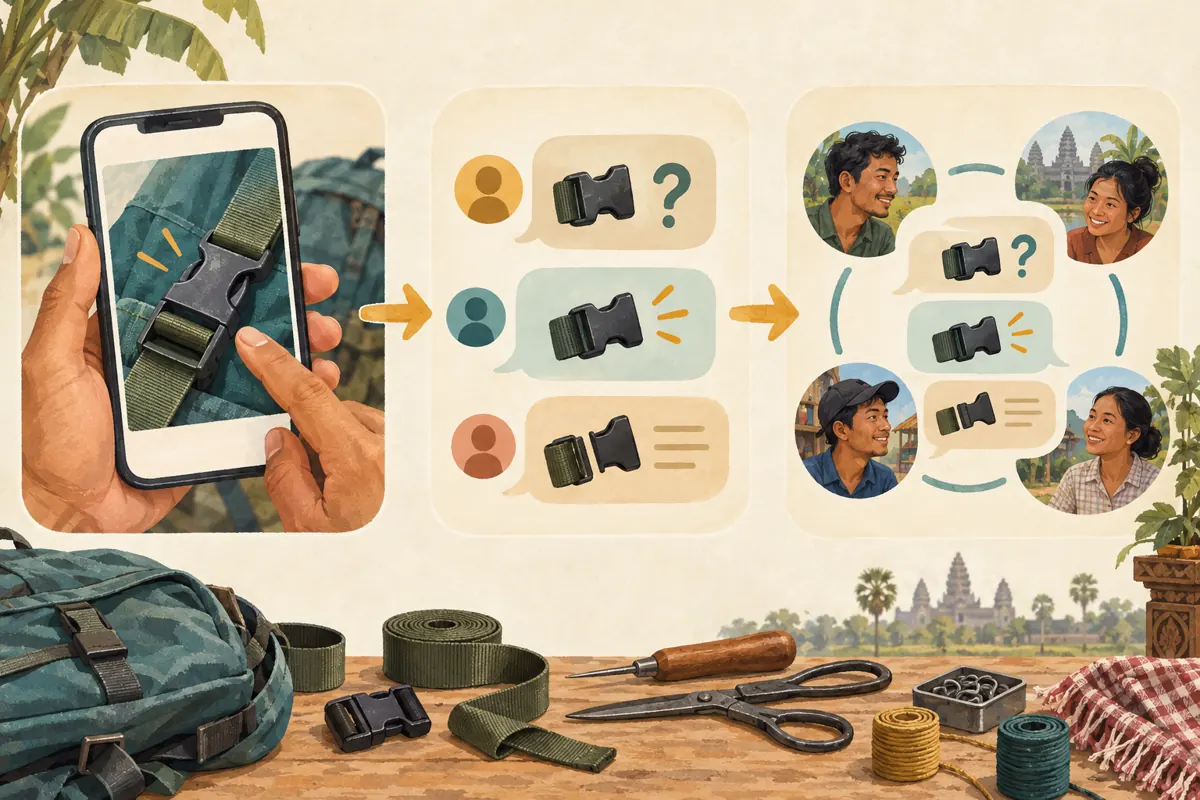
In the hypothetical shop, the demonstration shows a damaged buckle beside a possible replacement. The caption explains that compatibility needs checking and invites questions about what the inspection involves. It does not promise that every backpack can receive the same repair. Prepare the general answer before publishing: what the shop can explain publicly, what requires a photograph, and what requires seeing the bag. This keeps the discussion from becoming a series of premature quotes. If the demonstration cannot support a clear answer, improve the demonstration first.
2. Understand where Telegram comments appear
Telegram explains that channels with a linked discussion group can have comment buttons on their posts. Comments appear in a thread associated with the post and also in the discussion group. The practical consequence is that a comment is part of a shared conversation; it is not a private message to the repairer. This behavior is documented in Telegram's official Channel Comments announcement.
Explain that distinction in ordinary customer language. A short instruction can invite general repair questions below the demonstration and direct personal quotation details to the shop's chosen private contact. Avoid calling the comment area an order form. Someone asking whether a buckle is replaceable has not necessarily requested a repair, accepted a price, or reserved a time. Staff should also expect to encounter the same discussion through different views and avoid treating those appearances as separate customer enquiries.
3. Prepare the discussion group before promoting the post
Telegram's documented starting point is Channel Settings, then Discussion. Review the available controls in the app you use and link a group intended for customer discussion. Choose a clearly named customer space rather than a staff conversation containing supplier information, unfinished quotes, or internal notes. Review its membership, visible content, and permissions before inviting customers to use it.
Publish a clearly identified test post and ask a colleague to check the experience from an ordinary viewer's account. Confirm that the comment entry point appears, that the colleague can ask a harmless question, and that the assigned staff member can find and answer it. Check both the channel thread and the discussion group. Use invented test details rather than customer information. Do this before distributing the demonstration widely: a visible invitation to comment is only useful when the shop can reliably receive and handle the response.
4. Give the demonstration a precise discussion prompt
A broad invitation such as 'Any questions?' leaves viewers to decide what information matters. A more focused prompt helps them identify their uncertainty. For the hypothetical buckle post, an English drafting example is: 'Unsure whether your broken buckle needs a new strap too? Ask a general question below. For a quote, contact the shop privately with a clear photo of the damaged area.' Adapt the customer-facing wording into natural Khmer when that matches the shop's audience.
Show enough of the backpack to establish which component the demonstration concerns, then show the relevant detail. Keep the caption consistent with what is visible. If the video presents an inspection rather than a completed repair, say so. Do not invite viewers to publish names, delivery addresses, or receipts. Also state when staff normally review questions, using a response window the shop can maintain while serving people at the counter.
5. Answer in three parts: explanation, limit, next step
A useful public reply first addresses the question, then explains the limit of that answer, then gives a proportionate next step. In a hypothetical exchange, a viewer asks whether replacing one buckle half is enough. The shop might explain that it needs to check the matching parts, say that appearance alone does not confirm compatibility, and invite a private photograph or an in-person inspection. This is more useful than an unexplained instruction to message the shop.
Reply to the relevant question so readers can follow the exchange. Use the same component names as the demonstration and avoid technical shorthand that customers may interpret differently. If staff cannot answer immediately, acknowledge what needs checking without inventing a deadline. Once the repairer confirms the general point, add that explanation to the discussion. The goal is a small, readable body of useful answers, not a long thread of repetitive sales messages.
6. Move individual quotes into a private conversation
Transfer the conversation when the answer depends on the customer's particular bag, availability, collection needs, or payment details. Explain why the move is useful. For example, the hypothetical shop could say that it needs a closer photograph to assess the damaged attachment and ask the customer to use the contact listed in the channel. Give one clear destination so customers do not have to guess which staff profile is responsible.
Ask customers to include the demonstration's link or identify the buckle post when they contact the shop. Request only the information needed for the next decision. A repair photograph should avoid unnecessary personal belongings, address labels, or documents in the background. After the private exchange, leave the public thread with a general answer when appropriate, but do not report the customer's quote or booking. A move to private chat is an enquiry stage, not proof of a confirmed sale.
7. Set moderation rules a small team can maintain
Assign someone to review comments during defined shop hours and identify a backup for absences. Write a brief rule covering relevant questions, respectful conversation, unrelated advertising, and personal information. Give staff examples of what to answer, what to redirect, and what to remove under that rule. A small repair business benefits from consistent decisions more than from an elaborate policy nobody remembers.
Treat criticism differently from spam. A customer saying the demonstration is unclear may reveal a real gap; ask which step needs explanation and improve it. If someone posts private details, avoid repeating those details in a reply and use the available moderation controls appropriately. Do not remove reasonable questions merely because they interrupt a promotional tone. If staff cannot keep up, reduce the pace of new promotional posts while addressing outstanding discussions. Additional visibility will not solve an unanswered-question backlog.

8. Decide whether a panel service fits this objective
The supplied public catalogue includes 'Telegram - Post Views ~ 1 post ~ 𝐍𝐎 𝗥𝗘𝗙𝗜𝗟𝗟 ~ 100k/days ~ INSTANT'. Its name identifies a post-view offering aimed at one post. No supporting description was supplied, so the speed and refill wording should not be treated here as verified delivery promises. Check the current listing and applicable terms before making any decision. The name does not establish Cambodian audience targeting or a source of genuine repair questions.
If the objective is to learn what confuses customers about buckle replacement, purchased views cannot supply that evidence. They do not demonstrate genuine interest, sales, official ad delivery, or Cambodian users. A panel order also does not enable Telegram comments or assign a moderator. Establish the discussion workflow first, consider platform rules, and skip the purchase when it does not serve a defensible purpose. Never use a larger counter to imply that local customers recommend the shop.
9. Review questions and repair enquiries separately from views
Keep a simple review record containing the post link, question theme, public answer, any necessary private follow-up, and unresolved information. Store personal customer records separately with appropriate access. For the hypothetical demonstration, themes might include matching buckle halves, strap damage, and whether inspection is necessary. These categories tell the shop what to explain next without requiring a claim about campaign performance.
Telegram's Channels FAQ says its view counts are approximate and include views of forwarded copies. Consequently, the counter should not be read as a count of unique local prospects. If any panel activity occurs, record its timing separately and avoid attributing subsequent enquiries to it without evidence. Ask customers what helped them understand the repair when that fits naturally into the conversation. Record their answer as reported information. A confirmed repair should come from the shop's actual job record, not from a comment or view total.
10. Use the discussion to improve the next demonstration
Review the thread after the shop has had a realistic opportunity to respond. Look for a decision the original demonstration failed to explain. If viewers repeatedly confuse a broken buckle with a damaged strap attachment, the next post could show those two inspection situations clearly. Present it as the shop's explanation, without copying customer names, photographs, or messages into promotional material without permission.
Avoid three common mistakes: posting another sales clip before answering the existing questions, treating every comment as buying intent, and changing the subject whenever someone asks about a limitation. Decide whether the next action is a clearer caption, an additional demonstration, a staff briefing, or no further promotion. Preserve an accurate explanation of what the shop can assess remotely and what requires inspection. This creates a practical editorial cycle: demonstrate one issue, answer the resulting questions, and improve the information customers need before bringing in a bag.

Frequently asked questions
Should every question be moved to private chat?
No. Keep general explanations public when they help other viewers and do not expose customer information. Move the exchange when it requires individual photographs, a quote, collection arrangements, or payment details. Explain the general point before redirecting when possible, so the thread remains useful to the next reader.
What if nobody comments on the demonstration?
Check that the comment path works and that the prompt asks something customers can understand. Silence may mean the post answered the question, the audience was small, or viewers preferred private contact. It does not identify the cause by itself. Do not manufacture customer questions or purchase activity to imitate a useful discussion.
Can staff post a question to explain the process?
Yes, if it is clearly presented as a staff example or a frequently encountered repair question the shop can substantiate. Label an invented exchange as hypothetical. Do not disguise staff accounts as satisfied customers or imply that an illustrative question came from a real enquiry.
Does a post-view service bring people into the discussion?
The supplied listing does not establish that outcome. A post-view service title is not evidence of comments, local participants, or qualified repair enquiries. Evaluate discussion quality through actual questions and responses, and evaluate completed work through the shop's repair records. Keep any service-delivery record separate from those conclusions.
What should the shop do when a public answer becomes outdated?
Update the explanation where possible and add a clear correction in the relevant discussion. Identify what changed, such as the available replacement option, without implying that an earlier quote still applies. Review the original demonstration and caption too, so a new viewer does not receive conflicting instructions.
Explore the current service catalogue, create an account, or ask a specific question through support tickets.
Prepared with AI assistance. Illustrations explain the workflow and do not represent customer results.